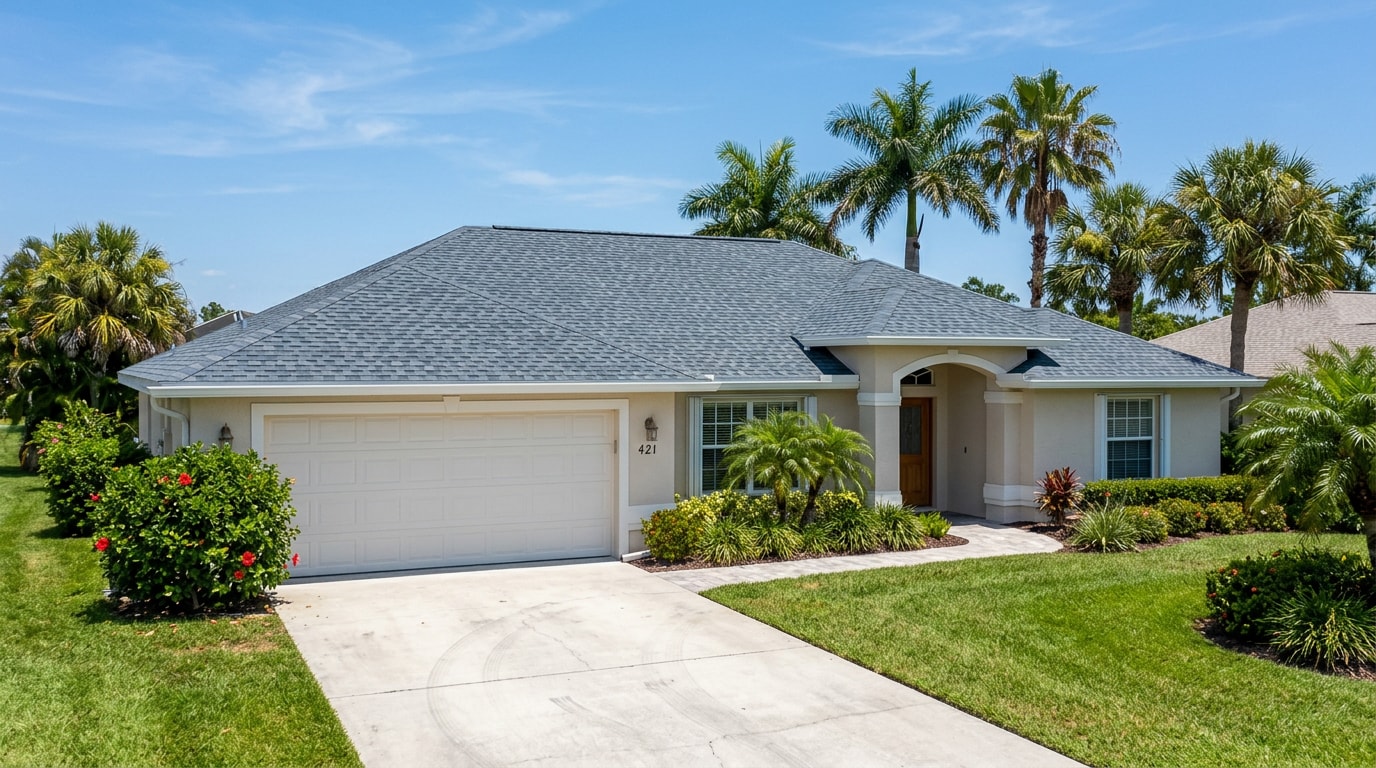
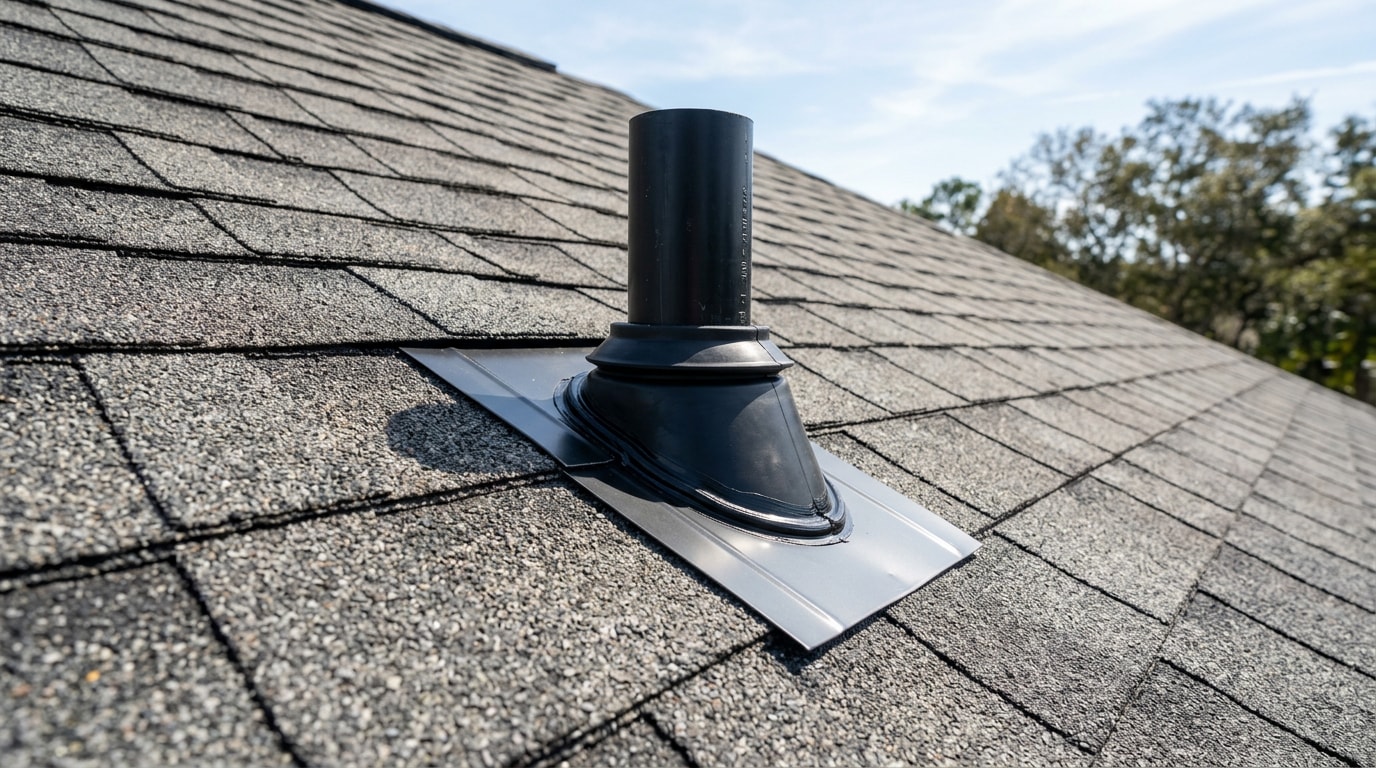
Roof vent flashing in Bradenton, FL fails faster than almost any other roof component because it sits at the exact spot where salt air, UV exposure, and wind-driven rain all converge. Most homeowners find out it's failing from a ceiling stain, a musty attic, or a line item on an inspection report, not out of curiosity. This guide covers what the flashing actually does, the signs it's failing, and what repair or replacement runs in Manatee County.
What Is Roof Vent Flashing?
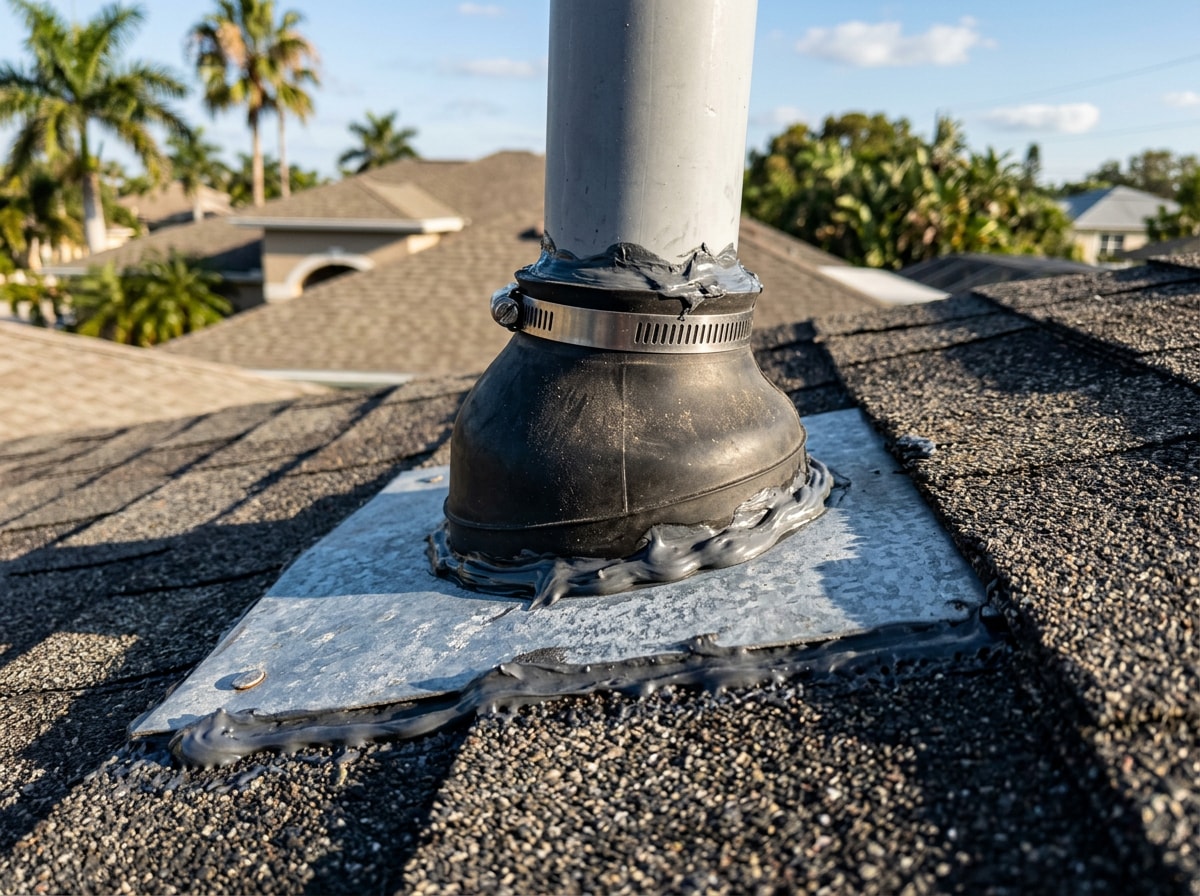
Roof vent flashing is the waterproof collar that seals the gap where plumbing stacks, exhaust vents, and other pipe penetrations pass through the roof deck. A complete system combines a metal or composite base flange, a rubber or thermoplastic boot, and sealant, all woven under the surrounding shingles so water sheds over it rather than around it. Florida's building code treats this detail as a core requirement, not an afterthought: soil stack, vent pipe, and chimney flashing must be installed according to the shingle manufacturer's printed instructions under the International Residential Code's roofing chapter.
Signs Your Roof Vent Flashing Needs Repair
Flashing failure rarely announces itself with a dramatic leak. It shows up as small, easy-to-miss clues first. Watch for:
- Water stains spreading from a ceiling near a vent pipe
- Musty odor or noticeable moisture in the attic
- Visible daylight around the base of a vent on close inspection
- Cracked, curled, or rusted boots and collars
- Shingles lifting near the vent opening
- Unexplained jumps in energy bills tied to wet insulation
If any of these sound familiar, don't wait for the next storm to find out how bad it is. A professional roof inspection confirms what's happening before the damage spreads into the decking or framing.
Why Bradenton's Climate Wears Out Vent Flashing Faster
Three local conditions push flashing to fail years ahead of schedule compared to inland markets.
Wind-Driven Rain and Storm Season
During hurricane season, rain doesn't just fall, it drives sideways and works up under loose flashing edges at every penetration. FEMA's hurricane mitigation guidance specifically flags vent pipe, chimney, and exhaust vent flashing as a point where wind-driven rain gets into the structure if it isn't fully integrated with the shingles and underlayment. The National Hurricane Center tracks the systems that test Gulf Coast roofs every season, Manatee County included, and a single named storm can turn a hairline gap into a soaked attic.
Coastal Salt Air
Homes near Anna Maria Island, Holmes Beach, and Cortez sit close enough to the Gulf that salt-laden air corrodes unprotected metal noticeably faster than roofs further inland. Galvanized flashing can pit and rust within a few years in these zones. Aluminum flashing resists that corrosion far better and is generally the smarter material choice for coastal roofing.
Constant Thermal Cycling
Bradenton's swing from humid afternoons to cooler nights makes roofing materials expand and contract on a near-daily basis. That cycling gradually works fasteners loose and dries out sealant around vent flashing, opening gaps that widen a little more with every cycle, often before they're visible from the ground.
What We See on Bradenton Roof Inspections
On recent service calls across Manatee County, our crews have noticed a pattern that doesn't always make it into a repair quote: rubber vent boots retrofitted over old metal flashing fail far sooner than boots installed as part of a full flashing replacement. The retrofit method is cheaper up front, but on a south-facing slope with direct afternoon sun, that glued-on collar can crack again within two to three years. If your roof already has one retrofit patch on a vent, it's usually more cost-effective to replace the flashing properly the next time rather than patch it again.
Flashing Repair vs. Replacement: Which Does Your Roof Need
Most vent flashing issues fall into one of three repair categories, and the right one depends on how far the damage has spread.
Flashing Repair Around Roof Vents
A proper flashing repair means removing the corroded or loose metal collar, clearing old sealant, and installing new flashing woven back under the surrounding shingles, not just caulked on top. Minor corrosion usually means a straightforward repair. Widespread corroded flashing or repeated leaks at the same vent call for full replacement instead.
Vent Boot Repair & Replacement
Rubber and plastic vent boots fail differently than metal flashing. Florida's UV exposure dries out rubber boots, causing cracks within a few years, while the metal underneath is often still sound. A cracked boot caught early often just needs a reseal or boot swap rather than a full flashing job.
Full Vent Replacement
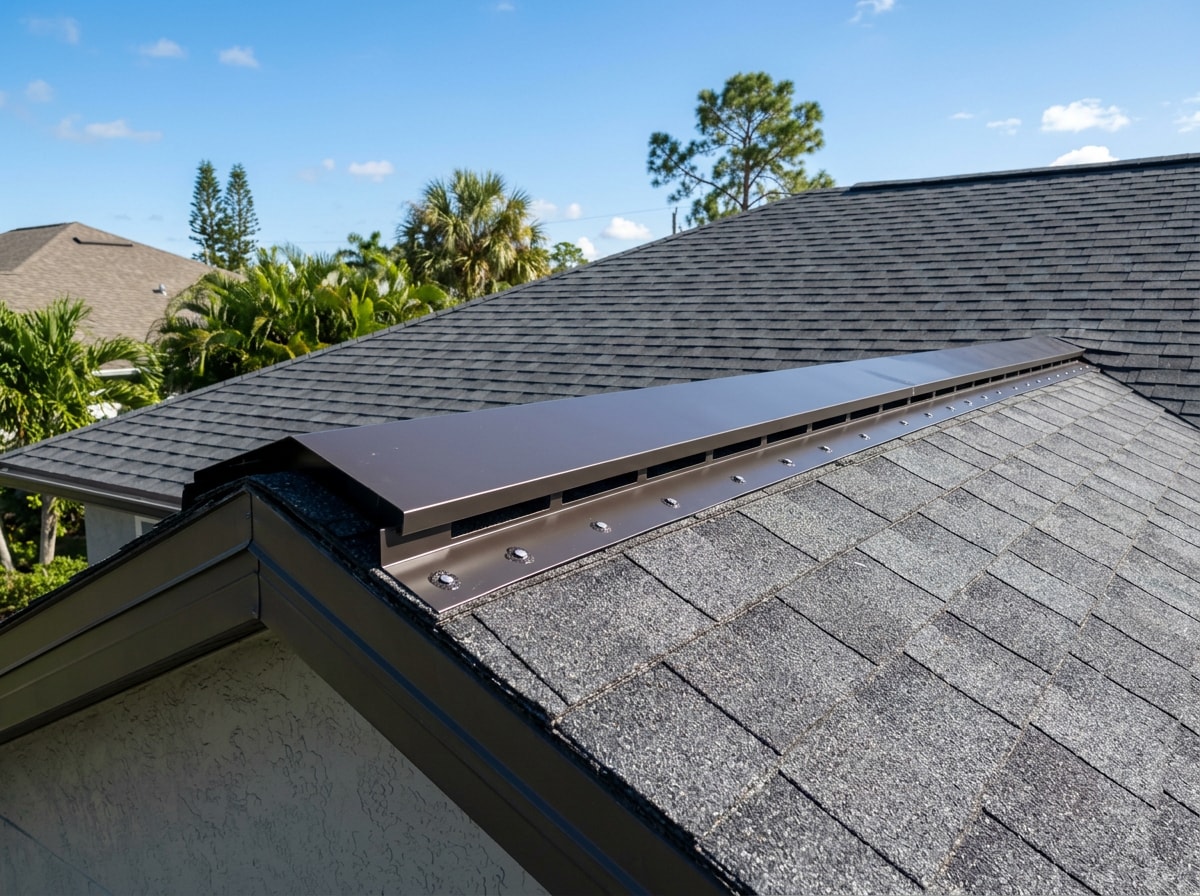
Full vent replacement, not just the flashing, makes sense when the vent itself is old, storm-damaged, or due for a wind-resistant upgrade. This applies across common vent types: ridge vents, box vents, soffit vents, and plumbing vent boots. A roof replacement specialist can tell you whether vent upgrades make sense alongside other roofing work, especially on a tile roof where penetrations are more complex. If your roof is tile, pairing this with a tile roof maintenance visit catches flashing issues the tile itself can hide.
Roof Vent Flashing Repair Costs in Bradenton
Pricing depends on roof pitch, material, vent accessibility, and whether the deck underneath needs attention. Treat the ranges below as a starting point, not a quote.
| Scope of Work | Typical Cost Range |
|---|---|
| Reseal or minor boot swap | $150 – $350 |
| Full flashing replacement at one vent | $300 – $700 |
| Flashing repair with deck repair | $700 – $1,500+ |
| Full vent replacement (ridge, box, or soffit) | $200 – $700 |
A free roof estimate gets you a number specific to your roof's pitch, material, and penetration count rather than a generic average.
Repair, Replace, or Just Reseal? A Quick Decision Guide
| If you see... | Likely fix |
|---|---|
| Hardened, cracked rubber boot, metal still solid | Boot swap/reseal |
| Rust streaks, lifted metal collar, shingles intact | Flashing repair |
| Repeated leaks at the same vent after a prior repair | Full flashing replacement |
| Vent itself is bent, storm-damaged, or undersized | Full vent replacement |
| Multiple vents failing across an aging roof | Pair with a roof repair or re-roof evaluation |
Don't Let a Small Leak Become a Bigger Repair
A cracked vent boot is a cheap fix. The same leak left for a season or two can soak insulation and sheathing, and that's where costs multiply. The EPA notes that mold can begin colonizing damp material within 24 to 48 hours of water intrusion, which is part of why a musty attic smell after rain is worth checking out promptly rather than waiting for a visible stain. If you're already dealing with staining or a musty smell, get a free roof estimate before the next storm front moves through.
Homeowners vetting a contractor for this kind of work should also confirm licensing status; our licensed roofing contractors in Manatee County guide walks through what Florida requires before you sign anything.
FAQ
How long does roof vent flashing last?
Properly installed roof vent flashing lasts 15 to 30 years in moderate climates. Bradenton's salt air and UV exposure often shorten that lifespan toward the lower end, especially for rubber boots and untreated metal.
What causes a roof vent to leak?
Common causes include a cracked rubber boot, lifted or corroded metal flashing, and failed sealant around the base. Any one of these can let water track into the attic during rain.
Should I replace the entire vent boot if it leaks?
Not always. A minor crack caught early can often be resealed. But if the boot is brittle, split in multiple spots, or the leak recurs, full vent boot replacement is the better long-term fix.
Is roof vent flashing covered by homeowners insurance?
It depends on the cause. Storm-related flashing damage is often covered; flashing that failed from age or wear typically isn't. Check your policy's wear-and-tear exclusions before filing a claim.
Can I repair roof vent flashing myself?
A ladder-and-caulk approach is possible for a tiny crack, but it's a short-term fix at best, and roof work carries real fall risk. For anything beyond a cosmetic reseal, a licensed roofer can properly integrate new flashing under the shingles instead of sealing over a problem that will resurface.
How do I know if my flashing problem is isolated or roof-wide?
One failed vent on an otherwise sound roof is usually isolated. If you're seeing flashing failures at multiple penetrations, or the shingles around several vents are aging at the same rate, it's worth a full roof inspection rather than chasing one leak at a time.
Ready to get your vent flashing checked before the next storm rolls through Manatee County? Visit {{SITE_URL}} or get a free estimate from a local, Florida-based crew.