Liquid applied roofing in Siesta Key, FL turns a flat or low-slope roof into one seamless, waterproof membrane instead of a patchwork of seams and fasteners. It's the system contractors reach for most often on barrier-island buildings that deal with salt air, ponding water, and relentless UV exposure. This guide breaks down the materials, installation steps, and real costs so you can vet a quote with confidence.
What Is Liquid Applied Roofing?
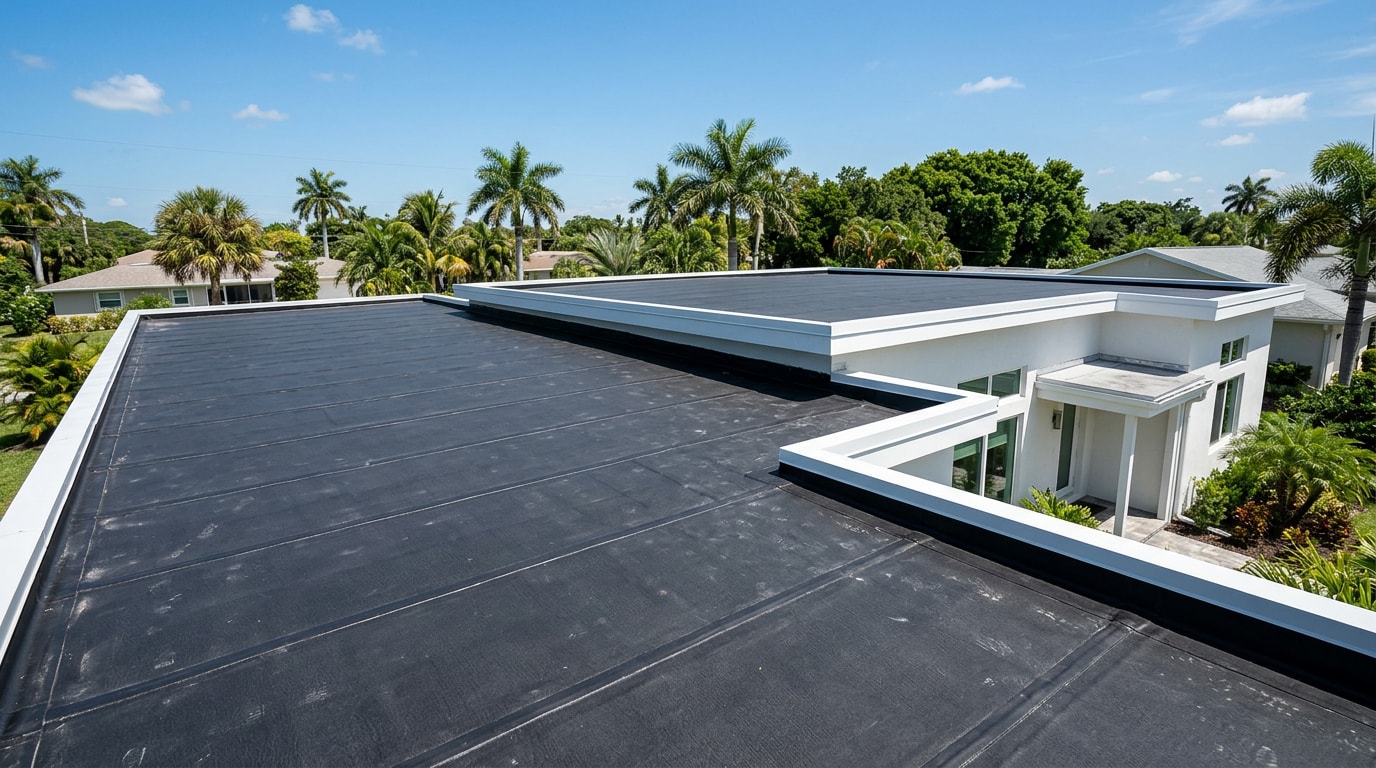
Liquid applied roofing systems are coatings sprayed, rolled, or brushed onto a roof surface, then cured into a continuous membrane that bonds tightly to the substrate below. Unlike sheet goods installed in overlapping rows, the finished product is one unbroken waterproof layer with no seams to fail.
This category covers several distinct chemistries, including acrylic, silicone, and polyurethane, each suited to different roof types and climates. Liquid applied roofing works on both residential and commercial low-slope roofs, and it has become a common recover option for buildings along the Gulf Coast. For a broader look at how this fits alongside other options, visit our roofing contractor services.
Liquid Applied Membrane vs. Roof Coating: Know the Difference
A lot of homeowners assume "liquid roofing" means one product, but the terminology splits into two different jobs.
- Liquid applied membrane: A standalone, primary waterproofing system. It is the roof.
- Roof coating: A restoration layer applied over an existing roof to extend its life and improve performance.
That distinction drives pricing. A full membrane system runs thicker and costs more per square foot because it carries the entire waterproofing load on its own. A restoration coating is thinner, cheaper, and depends on the condition of whatever is underneath it. Our roof coating page covers how we scope that kind of project. Knowing which one you're being quoted keeps the conversation honest.
Types of Liquid Applied Roofing Materials
Several chemistries dominate the market, and each performs differently depending on substrate, climate, and exposure.
- Acrylic coatings: Cost-effective with strong reflectivity, popular in moderate climates, but less tolerant of standing water.
- Silicone coatings: Excellent water resistance and UV protection, a frequent choice for roofs that deal with ponding water.
- Polyurethane coatings: Durable, impact-resistant, and chemical-resistant, useful on concrete and wood decks that see foot traffic or debris.
- PMMA/polyurea systems: Fast-curing, very strong wind-driven rain performance, often used where quick turnaround matters.
Elastomeric coatings suit PVC, TPO, and concrete substrates well, while silicone performs reliably on metal roofs, though some metal substrates need a primer first.
For a coastal market like Siesta Key, the right choice depends heavily on salt exposure, UV load, ponding risk, and wind-driven rain during storm season. Here's how the major chemistries generally stack up for Gulf Coast conditions:
| Coating Type | Salt Air Resistance | Ponding Water Resistance | UV/Reflectivity | Wind-Driven Rain Performance |
|---|---|---|---|---|
| Acrylic | Moderate | Weaker | Strong | Moderate |
| Silicone | Strong | Strong | Strong | Strong |
| Polyurethane | Strong | Moderate-Strong | Moderate | Strong |
| PMMA/Polyurea | Strong | Strong | Moderate | Very Strong |
This is a general guide, not a guarantee. Actual performance depends on the specific product, application quality, and roof design. Material-performance standards like ASTM D6083 for liquid-applied acrylic roof coatings can help you compare products on an apples-to-apples basis.
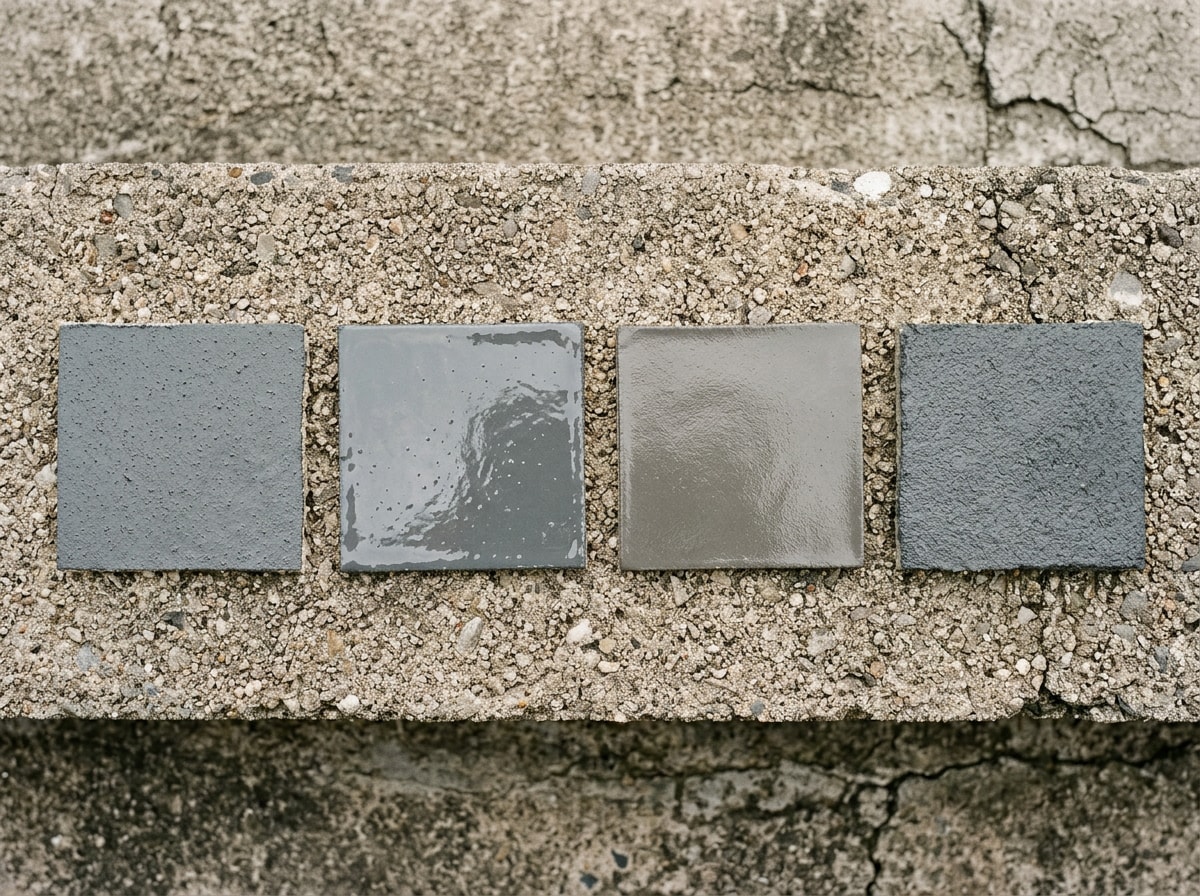
Key Chemistries and How They Work
Liquid applied roofing relies on a few core chemistries to balance adhesion, elasticity, and durability over time. During cure, the coating chemically bonds to the substrate while forming cross-links that give it stretch without tearing.
Cure time varies by product. Some acrylics set within hours, while certain silicones and polyurethanes take longer to fully harden. That elasticity is what lets the membrane move with a roof deck through temperature swings and minor structural flex without cracking.
Why Liquid Applied Roofing Holds Up on Siesta Key Roofs
The biggest advantage is the seamless membrane itself. No joints or seams means fewer natural leak points compared to traditional roofing. These systems also flex with temperature swings instead of cracking, and installation tends to be faster with fewer steps than a conventional tear-off.
Wide substrate compatibility is another plus. Concrete, metal, wood, and existing roofing can all accept a liquid system with proper surface preparation. On Siesta Key specifically, we've recoated flat-roofed homes and condo decks where salt spray had already chalked and thinned an older acrylic coating, and switching the next recoat to a silicone-rich formula held up noticeably better through the following storm season.
Many formulations are also engineered as reflective coatings, reducing heat absorption and supporting better building energy efficiency. A reflective roof can lower peak cooling demand, which matters for Florida buildings running air conditioning most of the year, as outlined in the Department of Energy's guidance on cool roof products.
Common Applications of Liquid Applied Roofing
Roof restoration and repair is one of the most common uses. Liquid coatings can rejuvenate an aging roof by sealing cracks and leaks, extending its usable lifespan without a full tear-off. This makes liquid applied roofing a practical option when a roof still has structural life left but is showing surface wear; see our flat roof repair guide for Siesta Key properties for how that decision usually plays out.
It also wins over single-ply systems on roofs with heavy detailing, buildings that can't accommodate torches or hot asphalt, and complex roof shapes with tricky deck geometry. Anywhere a fully bonded system with no lateral water tracking is needed, liquid applied roofing tends to be the more practical fit. Explore our commercial roofing contractor services or our flat roof repair services for project scope and pricing.
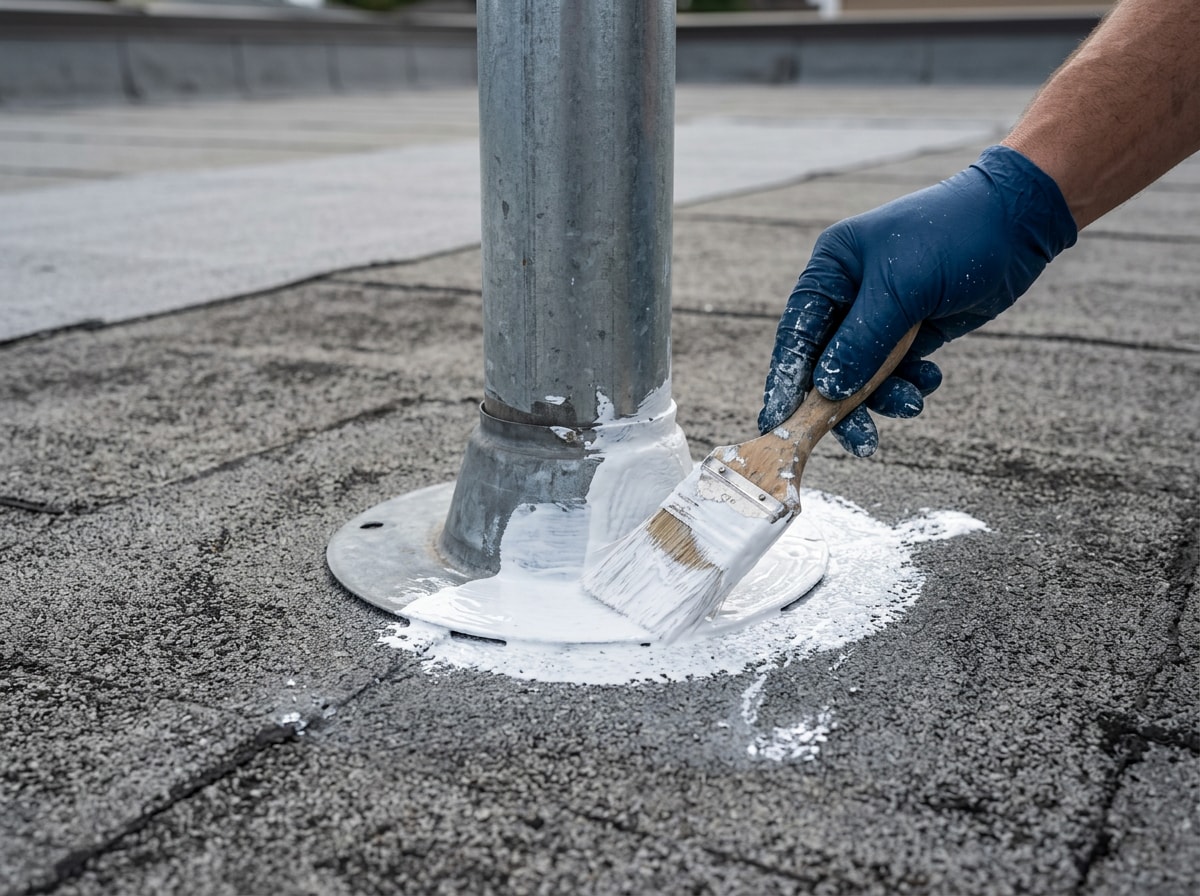
How Liquid Applied Roofing Is Installed
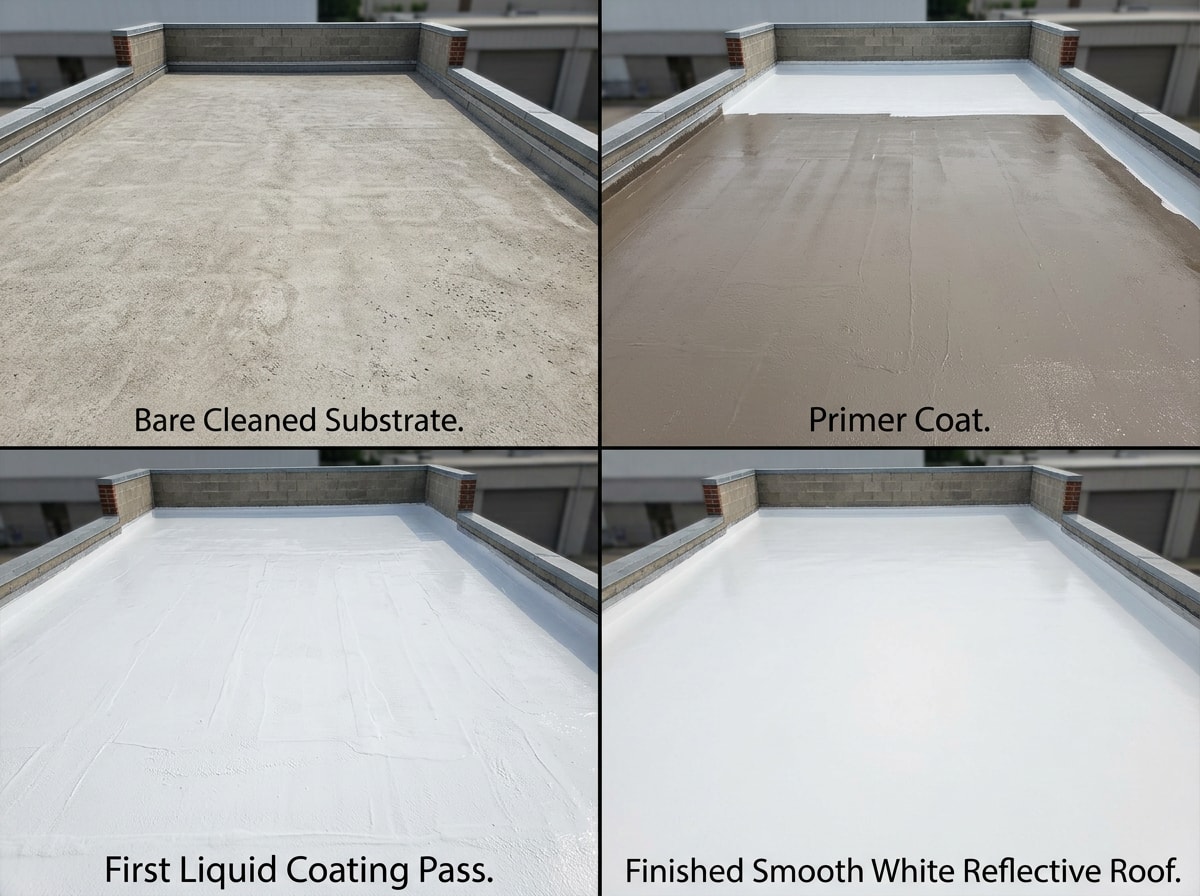
Installation follows a fairly consistent sequence regardless of which chemistry is chosen:
- Assessment and cleaning. Inspect the roof for damage, remove debris, and clean the surface to the manufacturer's recommended cleanliness standard.
- Substrate preparation. Repair cracks, re-seal flashing details, and treat any ponding areas before coating.
- Priming. Match the primer to the substrate. Concrete, metal, single-ply, and modified bitumen each have different primer requirements.
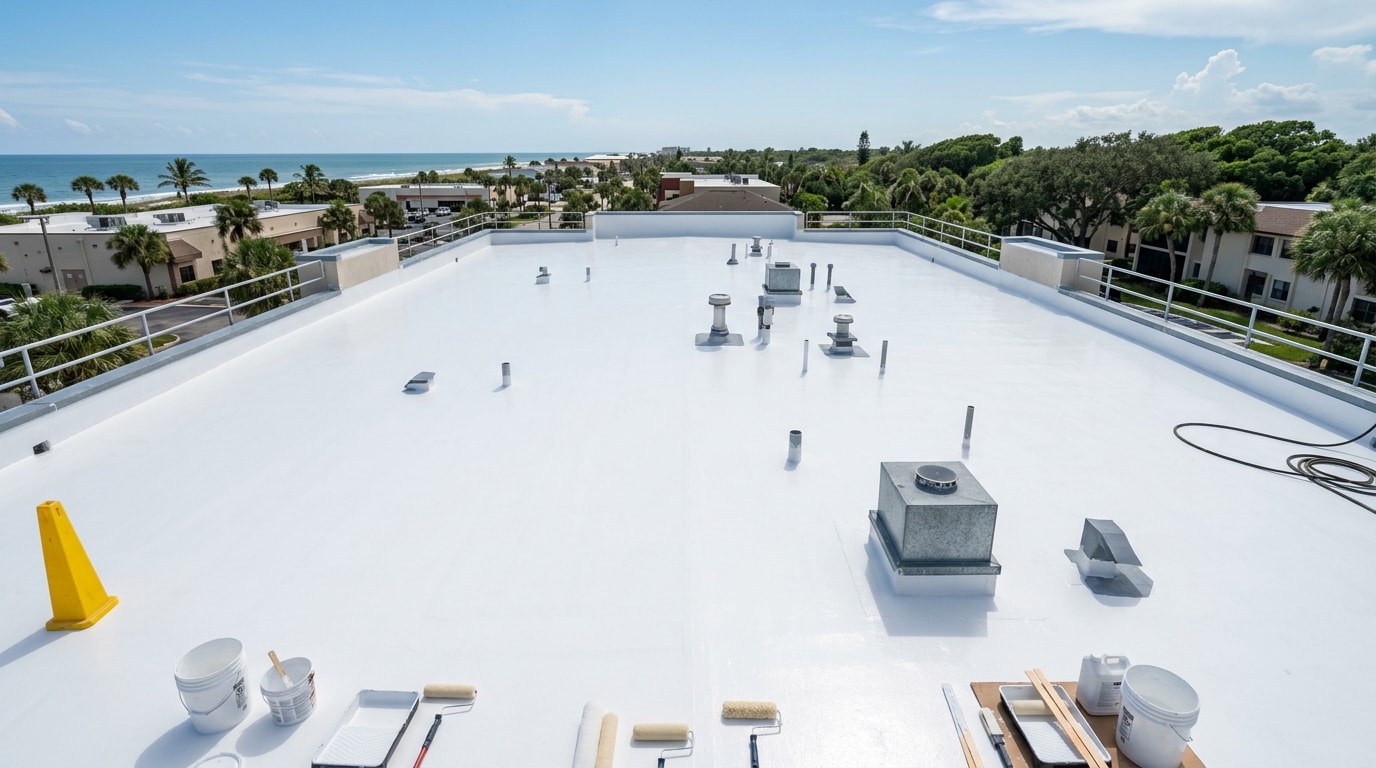
- Coating application. Apply by brush, roller, or spray equipment, usually in multiple coats.
- Cure. Allow the system to cure fully according to the manufacturer's specifications before foot traffic resumes.
Rooftop work carries real fall risks, and crews should follow OSHA's fall protection standards for roofing work throughout the job.
Comparing Liquid Applied Roofing to Traditional Roofing Systems
| Feature | Liquid Applied Roofing | Traditional Roofing |
|---|---|---|
| Upfront Cost | Varies by chemistry | Varies, often comparable |
| Lifecycle Cost | Often lower long-term | Higher due to seam maintenance |
| Installation Time | Generally faster | Often longer, more steps |
| Maintenance | Lower, fewer seam failures | Higher, more seam-related repairs |
The lifecycle cost argument is where liquid applied roofing tends to pull ahead: fewer seams means fewer places for water to find a way in over the years. Coastal projects also need to account for the wind resistance and slope provisions in Chapter 15 of the Florida Building Code, which apply regardless of which system you choose.
Maintenance, Longevity, and Performance
Routine maintenance extends the life of a liquid applied roof and helps preserve manufacturer warranties, so it's not a system you install and forget. Expect periodic inspections, cleaning of debris, and prompt attention to any penetrations or blisters that develop. Our roof inspection service is a straightforward way to keep that on schedule.
Service life generally runs 10 to 20 years or more, depending on material choice, climate exposure, and how consistently the roof is maintained. Salt air and intense UV exposure in a market like Siesta Key can shorten that window if upkeep is neglected.
Cost, ROI, and Warranties
Pricing for a liquid applied roof system depends on coating type, roof size, substrate condition, and how much prep work is needed before application. Acrylic systems tend to sit at the lower end of the cost per square foot, while silicone and polyurethane command higher prices because of their added performance and durability.
The ROI case largely comes down to seam elimination. Fewer seams mean fewer leak-related repairs and lower long-term maintenance spending compared to systems with mechanical fasteners or overlapping joints. Warranty terms vary by manufacturer and product line, so confirm coverage details before signing off on a system. Contact us for a free estimate with project-specific numbers for your property.
Choosing the Right Liquid Applied Roofing System for Your Project
Selecting the right product means weighing climate exposure, roof substrate condition, your maintenance plans, and the warranty terms that matter most to you. A roof with frequent ponding may call for silicone, while a lower-exposure roof might do fine with acrylic at a lower upfront cost.
Lean on the lifecycle framing covered above rather than chasing the cheapest upfront quote. A system matched to your climate and substrate will usually outperform one chosen on price alone. If you're weighing options for a property in the area, visit our Siesta Key service area page or head to our homepage to see the full range of roofing services we offer.
FAQ
Is maintenance expensive for a liquid applied roof?
Maintenance is typically moderate, focused on inspections, minor repairs, and periodic re-coating. Staying on top of these tasks helps extend the roof's life and protects your original investment.
How long does installation take?
Depending on roof size and the system chosen, projects can range from a few days to a couple of weeks, including cure time between coats. Weather and access conditions can also affect the timeline.
What type of roofing material is best for a flat roof?
It depends on the roof's shape, ponding risk, and budget. Liquid applied systems excel on complex geometry and seamless waterproofing, while TPO or modified bitumen may suit simpler, larger flat expanses. Comparing lifecycle costs, as covered above, helps clarify the better long-term fit.
Does liquid applied roofing hold up to Siesta Key's salt air?
Silicone and polyurethane formulations generally handle salt exposure best, since they resist softening and degrading in humid, salt-laden air better than standard acrylics. Proper surface prep and primer selection matter just as much as the coating itself.
Can liquid applied roofing handle ponding water?
Silicone and PMMA/polyurea systems are the strongest choices for roofs that hold water after storms. Acrylic coatings are more prone to softening or thinning under prolonged ponding, so they work best on well-drained roofs.
Will insurance cover a 20-year-old roof in Florida?
Coverage varies widely by carrier and policy, but many Florida insurers require inspections for roofs over 15-20 years old and may limit coverage based on condition. Check directly with your insurer before assuming coverage either way.
How much does it cost to roof a 1,500 sq ft house in Florida?
Costs vary widely based on material, roof complexity, and current condition, generally ranging from a few thousand dollars for coatings to a substantially higher figure for full replacement. The liquid applied cost factors covered earlier in this guide can help frame where your project might land. For material comparisons on other roof types, see our guide to metal roofing in Sarasota as a cost reference point.
This guide is provided by the licensed roofing team at Avery Roof Services, serving Siesta Key and the greater Sarasota and Manatee County area. Our crews work hands-on with liquid applied, coating, and flat roof systems on coastal properties year-round. Questions about your roof? Contact us for a free, no-pressure estimate.