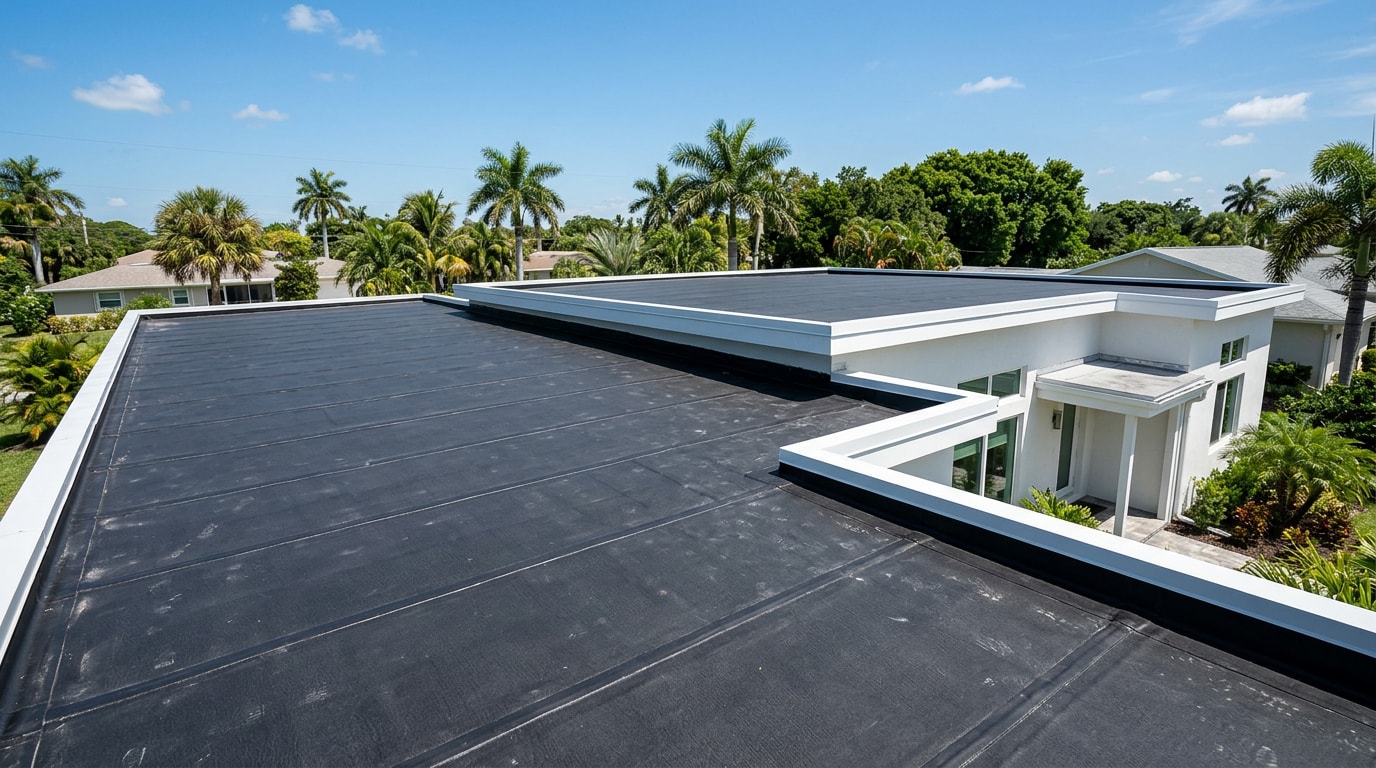
EPDM roof installation in North Port, FL is one of the most requested flat-roof upgrades we see on additions, lanais, garages, and commercial buildings across Sarasota County. This synthetic rubber membrane handles intense sun, heavy rain, and hurricane-force wind better than many traditional low-slope materials when it's installed correctly. Here's what actually drives cost, how the installation really works, and how to tell a solid EPDM job from a rushed one.
What Is EPDM Roofing?
EPDM (ethylene propylene diene monomer) is a synthetic rubber membrane used as a single-ply roofing system on flat and low-slope roofs. The sheet itself is manufactured to a national material standard: this specification covers flexible sheet made from ethylene-propylene-diene terpolymer intended for use in single-ply roofing membranes exposed to the weather , which is what gives EPDM its consistent performance across manufacturers.
It's installed as large rolled sheets that form one continuous rubber membrane, rather than overlapping layers like shingles, which cuts down on seams and leak points. Installing it involves cleaning and prepping the deck, unrolling the membrane and letting it relax, bonding or fastening it, sealing the seams, and flashing the edges. That short version undersells how much the details matter, which is covered further down.
EPDM Roof Installation Cost in North Port, FL (2026)
Cost is usually the first question homeowners ask, and pricing swings more than people expect based on membrane thickness, attachment method, and labor rates.
In 2026, 60-mil black EPDM installs at $6 to $10 per square foot all-in for a typical low-slope roof, including tear-off, polyiso insulation, drains, permit, and disposal, while 45-mil drops to about $5 to $8 per square foot . Coastal, hurricane-zone areas like North Port often run toward the higher end of that range, since wind-rated fastening patterns, thicker membranes, and extra flashing work add labor hours.
A few things move the number up or down:
- Membrane thickness — 45-mil costs less than 60-mil or 90-mil.
- Attachment method — fully adhered systems generally cost more in labor than mechanically fastened ones.
- Insulation — adding or upgrading polyiso insulation adds materials and labor.
- Deck condition — rotted or multi-layered decking adds tear-off time.
Replacing an existing EPDM roof typically costs more than installing over bare decking, mainly because of tear-off and disposal labor. Removing one layer of old membrane typically costs $1.40 to $1.85 per square foot , and that climbs higher if there are multiple layers to strip. A written, itemized quote from a licensed roofing contractor will show you which of these factors apply to your specific project.
Why EPDM Roofing Works Well in North Port's Climate
North Port sits in a subtropical zone with intense UV exposure, high humidity, and a real risk of hurricane-force winds every storm season. Traditional roofing materials often degrade faster here: UV rays break down asphalt, and trapped moisture under shingles invites rot.
EPDM handles these conditions differently. The membrane resists UV breakdown, stays flexible through heat swings instead of cracking, and sheds water efficiently across wide, nearly seamless sheets. Paired with the right wind-rated attachment method, a properly installed EPDM system is a strong match for North Port's climate. Homeowners in our North Port service area should talk through wind-zone requirements with their installer before finalizing a material choice.
EPDM Roofing Benefits and Drawbacks
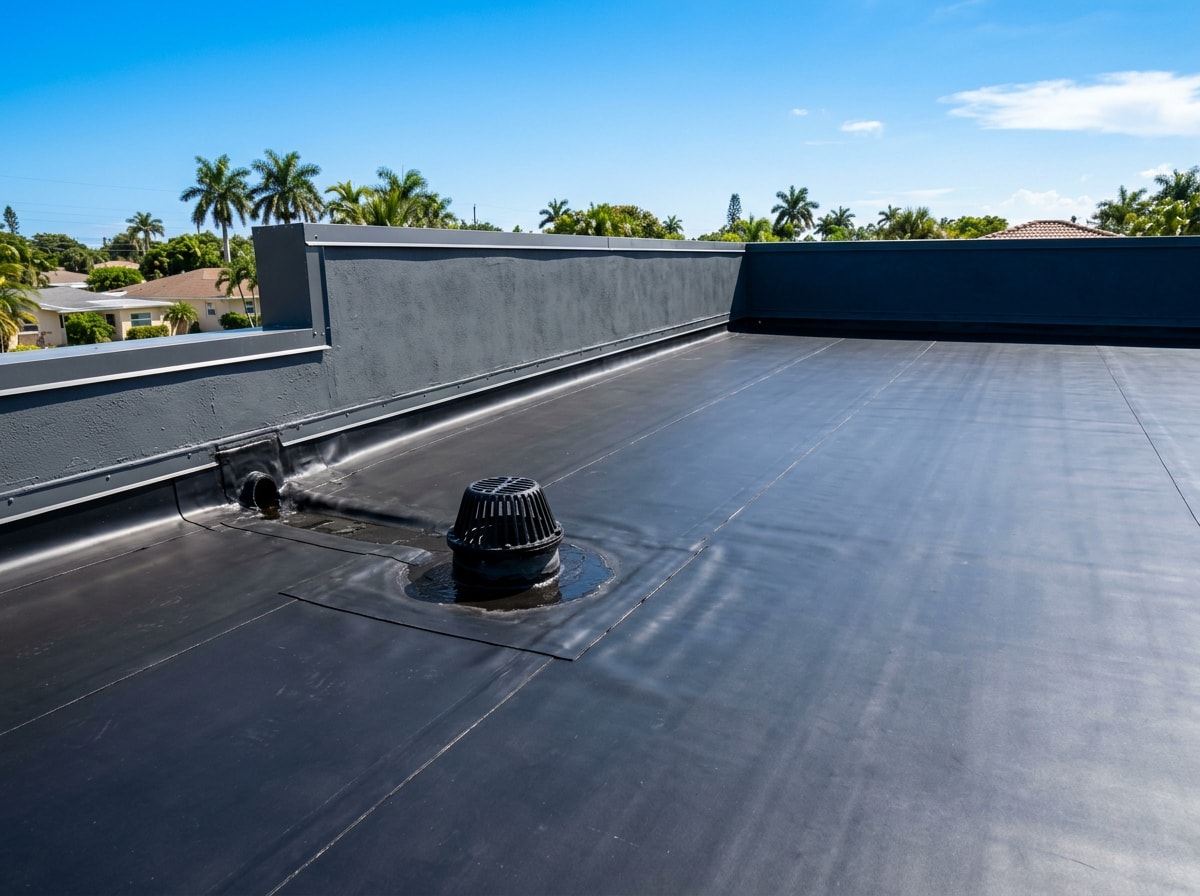
EPDM's biggest draw is its balance of cost and performance. It's one of the more affordable single-ply systems available, and because sheets come in large widths, there are far fewer seams than with smaller-format materials, meaning fewer potential entry points for water.
The upside:
- Lower material and installation cost than TPO or PVC in many cases.
- Fewer seams across a given roof area.
- Long track record in hot, humid climates.
- Holds up to repeated heat cycling without becoming brittle.
The downside:
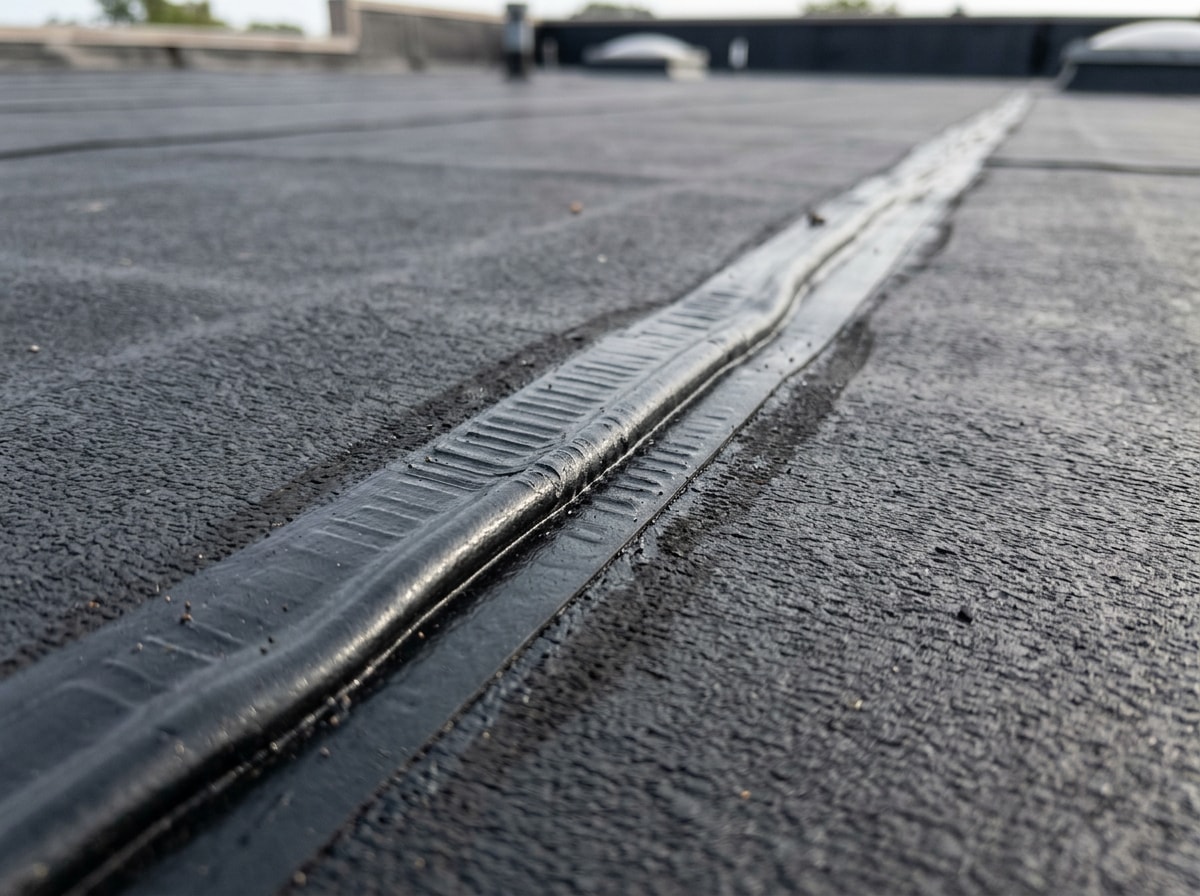
- Seams still have to be sealed correctly, and that step doesn't tolerate shortcuts.
- Standard black membrane absorbs heat, which can raise attic temperatures.
- Punctures from fallen branches or careless foot traffic are a real risk.
A poorly sealed seam is the most common cause of EPDM leaks. That says more about installation skill than about the material itself, which is why we treat roof repair calls on EPDM roofs as seam-and-flashing inspections first, not just patch jobs.
How EPDM Roofing Is Installed
Two things determine how well an EPDM roof performs long-term: the attachment method chosen for the job, and how carefully each installation step is carried out.
Three EPDM Attachment Methods
EPDM roofing is installed using one of three attachment methods: fully adhered, mechanically attached, or ballasted. Each differs in wind resistance, installation cost, and suitability for North Port's hurricane-prone coastal climate.
- Fully adhered EPDM is bonded directly to the roof deck with adhesive and is generally recommended for high-wind areas, since it offers the best resistance to wind uplift during a storm.
- Mechanically attached EPDM uses fasteners and plates instead of full-surface adhesive, lowering cost on projects where uplift risk is lower.
- Ballasted EPDM relies on stone or paver ballast and is less common on Florida's sloped or visible roofs.
Wind-uplift design isn't guesswork. Designers aim to design roof systems to have a tested uplift greater than the highest design wind pressure, then enhance the attachment at the roof's perimeter and corners, with perimeter attachment increased by a minimum of 50 percent and corner attachment increased by at least two times . On top of that, a minimum safety factor of 1.5 up to 2.0 is recommended for low-slope membrane roof systems , which is exactly why the attachment method matters as much as the membrane itself in a wind zone like North Port.
Step-by-Step Installation Process
Regardless of attachment method, most EPDM projects follow the same core sequence:
- Inspect and prepare the deck. Remove old roofing material, repair damaged decking, and confirm the surface is clean, dry, and smooth. This is also when a proper roof inspection catches hidden rot before it gets covered up.
- Unroll and relax the membrane. The sheet is dry-laid across the roof and left to relax for at least 30 minutes so it lies flat before bonding.
- Bond or fasten the membrane. Adhesive goes down for fully adhered systems, or fasteners and plates are installed for mechanically attached systems.
- Splice and seal the seams. Overlapping edges are cleaned, primed, and joined with cured seam tape to form a watertight bond.
- Flash penetrations and edges. Walls, curbs, drains, and roof edges are flashed up to keep wind-driven rain from working underneath the membrane.
One detail matters more in North Port than in drier climates: Florida's heat and humidity can speed up or interfere with adhesive tack time, so experienced crews adjust pace and timing for a full, even bond instead of rushing the cure.
Why Professional Installation Is Essential
EPDM is a forgiving material on paper, but installation is where problems get prevented, or created. Two roofs with identical membrane can perform very differently depending on deck prep, seam work, and flashing detail.
Crews who install EPDM regularly in Sarasota County learn the local quirks fast: how humidity affects adhesive open time, which parapet details leak first in a northeaster, and where ponding tends to collect on older decks. That's the kind of judgment call you want on your roof, not a crew installing EPDM for the first time this year. If you're planning a project, get a free estimate from a team that works with EPDM on a regular basis.
How to Choose an EPDM Roofing Contractor in Florida
Choosing the right installer matters as much as choosing the right material.
- Confirm the business holds an active Florida roofing license and current liability insurance.
- Ask how many single-ply EPDM projects they've completed in the last year, not just flat roofs in general.
- Ask which attachment methods they're comfortable with and why they'd recommend one for your roof.
- Review warranty terms carefully. Manufacturer warranties often depend on using an approved installer and following specific application steps.
For commercial buildings, the stakes are higher since larger membrane runs mean more seams to manage correctly. Our commercial roofing contractor team and our guide to commercial flat roofing in North Port cover what to ask before signing a contract.
EPDM vs. TPO vs. PVC in Florida
EPDM isn't the only single-ply option for flat Florida roofs. TPO and PVC are the two most common alternatives, and each trades off differently on cost, lifespan, and wind performance.
| Material | Typical Installed Cost | Expected Lifespan | Wind/Hurricane Performance |
|---|---|---|---|
| EPDM | $6–$10/sq ft | 25–40 years with good maintenance | Strong with fully adhered systems |
| TPO | $7–$12/sq ft | 20–25 years | Good, but seams can be a weak point |
| PVC | $8–$14/sq ft | 25–30 years | Strong, resists chemical exposure |
A well installed and maintained EPDM roof often lasts 25 to 40 years or more , which puts it on par with or ahead of TPO in most side-by-side comparisons. White EPDM is also an option where energy efficiency matters: an ideal cool roof has both high solar reflectance and high thermal emittance , and a reflective membrane or roof coating can reduce attic heat gain on a standard black membrane.
EPDM tends to offer the best value upfront, while PVC often edges it out on raw lifespan under harsh chemical exposure. The right choice depends on your budget, roof slope, and how long you plan to stay in the property.
Is EPDM Roofing Right for You?
EPDM tends to make the most sense for flat or low-slope roofs, additions, garages, lanais, and many commercial buildings, where budget and seam simplicity matter more than high-end aesthetics. If your roof is steeply pitched or highly visible, a different material may suit the look better.
For most flat-roof projects, EPDM is a solid, cost-effective default unless you have a specific reason to choose otherwise. Browse our full roofing services lineup to see how it compares for your property, or ask about a roof replacement quote if your current flat roof is already past its service life.
FAQ
What are the downsides of EPDM rubber roofing?
EPDM's main downsides are seam vulnerability if installation is rushed, heat absorption on dark membranes that can raise attic temperatures, and punctures from fallen branches or foot traffic. Regular inspections catch most of these issues before they become leaks.
What is the 25% rule for roof replacement in Florida?
Florida Building Code Section 706.1.1 states that not more than 25 percent of the total roof area or roof section of any existing building or structure shall be repaired, replaced or recovered in any 12-month period unless the entire roofing system or roof section conforms to requirements of this code . That said, SB 4-D took effect in May 2022 and changed how the rule applies: as long as the rest of the roof already complies with the 2007 Florida Building Code or a later edition, a full roof replacement is no longer automatically required . Roofs permitted before March 1, 2009 are still generally governed by the older, stricter version of the rule. Check with your local building department or the Florida Building Commission for how it applies to your specific roof.
How much does it cost to replace an EPDM roof?
Replacement typically costs more than new installation on bare decking, mainly because of tear-off and disposal labor. Expect that added cost to run roughly $1 to $3 per square foot above new-install pricing, depending on deck condition and how many old layers need removal.
Is EPDM roofing good for Florida weather?
Yes. EPDM generally performs well in Florida's climate thanks to UV resistance, flexibility across temperature swings, and the ability to handle humidity and wind-driven rain, provided it's installed with a wind-rated attachment method suited to your zone.
How long does EPDM roofing last in Florida?
Most well-installed and maintained EPDM roofs last 25 to 40 years. Poor seam work, standing water, and skipped maintenance can shorten that significantly, while periodic inspections and prompt debris removal help the membrane reach its full expected lifespan.
Can EPDM be installed on a commercial building in North Port?
Yes. EPDM is one of the most common systems for commercial flat roofs because of its large sheet widths and lower per-square-foot cost. A commercial roof replacement on a larger building usually benefits most from a fully adhered or mechanically attached system rated for the building's exposure category.
Ready to talk specifics for your roof? Contact us for a free, no-pressure EPDM estimate.