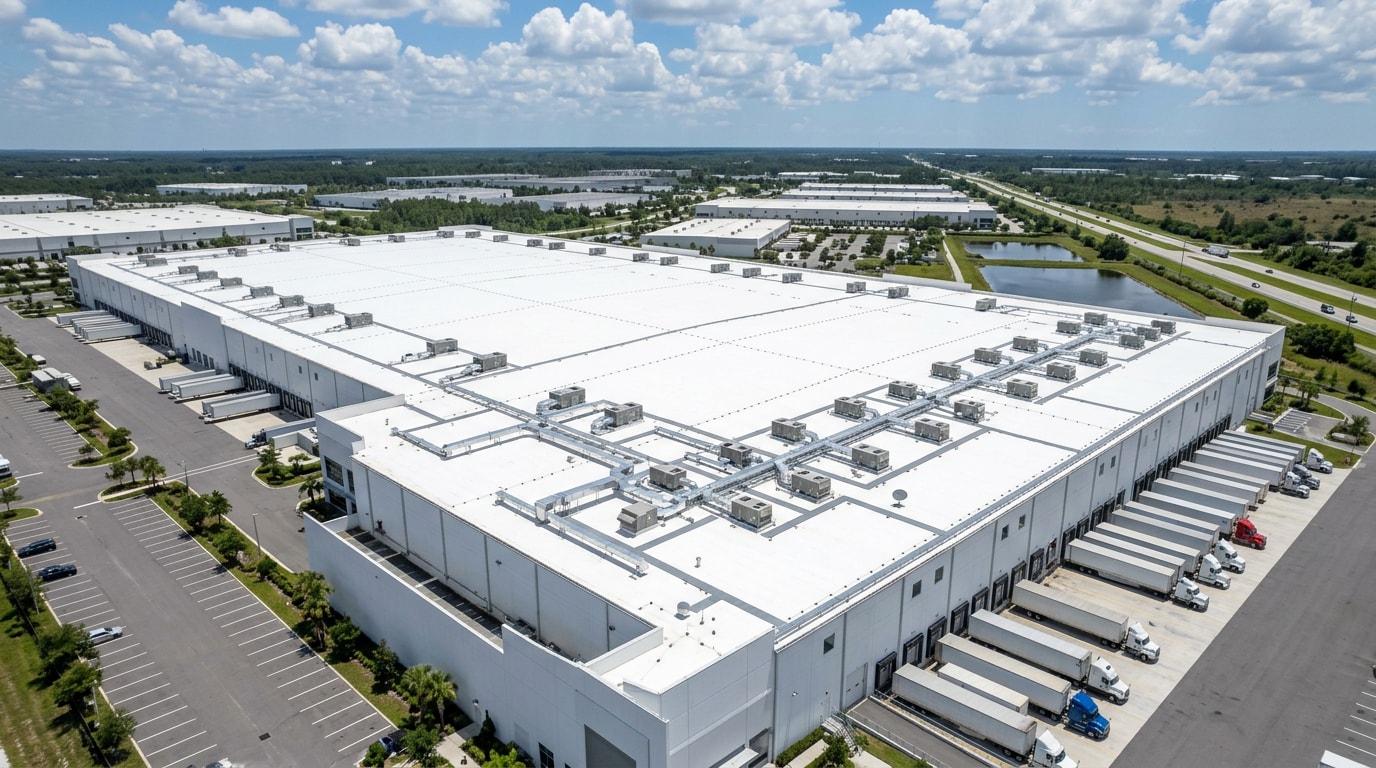
Industrial roofing in Sarasota County, FL covers the large, low-slope systems protecting warehouses, plants, and distribution centers, structures engineered differently than a house. Choosing the wrong membrane or skipping a wind-uplift detail here doesn't just cost money; it can shut down an operating facility mid-hurricane season. This guide breaks down the materials, code requirements, and contractor questions that actually decide whether your roof holds.
What Counts as Industrial Roofing
Industrial roofing applies to manufacturing plants, warehouses, cold storage, and distribution centers, buildings with expansive roof decks, dense penetration counts for HVAC and exhaust equipment, and heavier structural loads from rooftop machinery. That's a different job than a retail strip-center reroof or a residential tear-off.
Flat and low-slope designs maximize usable interior space, but they demand different waterproofing and drainage engineering than a pitched roof. Our team at Avery Roof Services handles both ends of that spectrum across the Gulf Coast, from Commercial Roofing Contractor work on single-tenant warehouses to multi-building distribution campuses.
Industrial Roofing Materials Compared
Material choice depends on expected lifespan, maintenance tolerance, energy-efficiency goals, and compliance with Florida's wind code. Here's how the four systems we install most often on Sarasota County facilities stack up.
| Material | Typical Service Life | Key Advantage | Best Fit |
|---|---|---|---|
| TPO (thermoplastic polyolefin) | 20–30 years with proper maintenance | Reflective, heat-welded seams, strong UV resistance | Warehouses needing lower cooling loads |
| EPDM (synthetic rubber) | 25–40+ years, field-verified beyond 40 in some cases | Flexible across thermal cycling, simple seams | Roofs with heavy equipment vibration or movement |
| Metal (standing seam) | 40–60+ years | Sheds wind-driven rain, resists uplift when fastened correctly | Owners prioritizing lifecycle cost over upfront price |
| Built-up/modified bitumen | 20–30 years | Multi-ply puncture resistance | Roofs with regular foot traffic for equipment service |
TPO Roofing
TPO is a single-ply membrane valued for chemical and UV resistance, a strong fit for Sarasota's sun exposure. Its reflective surface deflects heat rather than absorbing it, which matters on large low-slope roofs where cooling costs scale with square footage. Cool roofing products are generally economical on low-slope roofs for commercial or industrial buildings, and cool options are available for most traditional roofing materials.
EPDM Roofing
EPDM handles thermal expansion and contraction well, which matters on industrial roof decks baking under direct sun for most of the year. The EPDM Roofing Association's 2025 survey of 569 roofing professionals found expected service lives ranging from about 25 years to more than 40 years depending on membrane thickness and attachment method , and many respondents reported encountering EPDM roofs still performing at 40, 45, and even 50 years of age. That's a wide range, so thickness and installation quality matter more than the material label alone.
Metal Roofing
Standing seam and other metal systems offer one of the longest lifespans in commercial roofing. Metal performs well as a storm-resistant option, shedding wind-driven rain and resisting uplift when properly fastened to the deck. If you're weighing metal for new construction or a full tear-off, our Steel Roof Installation in Sarasota, FL guide covers cost ranges and the installation process in more depth.
Built-Up & Modified Bitumen Roofing
Built-up roofing (BUR) layers alternating plies of asphalt and reinforcing fabric under a gravel or mineral cap, the classic tar-and-gravel roof. Modified bitumen uses similar asphalt-based technology in factory-manufactured rolled sheets, which speeds installation. Both offer solid puncture resistance for industrial roofs that see regular foot traffic for HVAC or exhaust equipment service.
Florida Building Code & Wind-Uplift Requirements
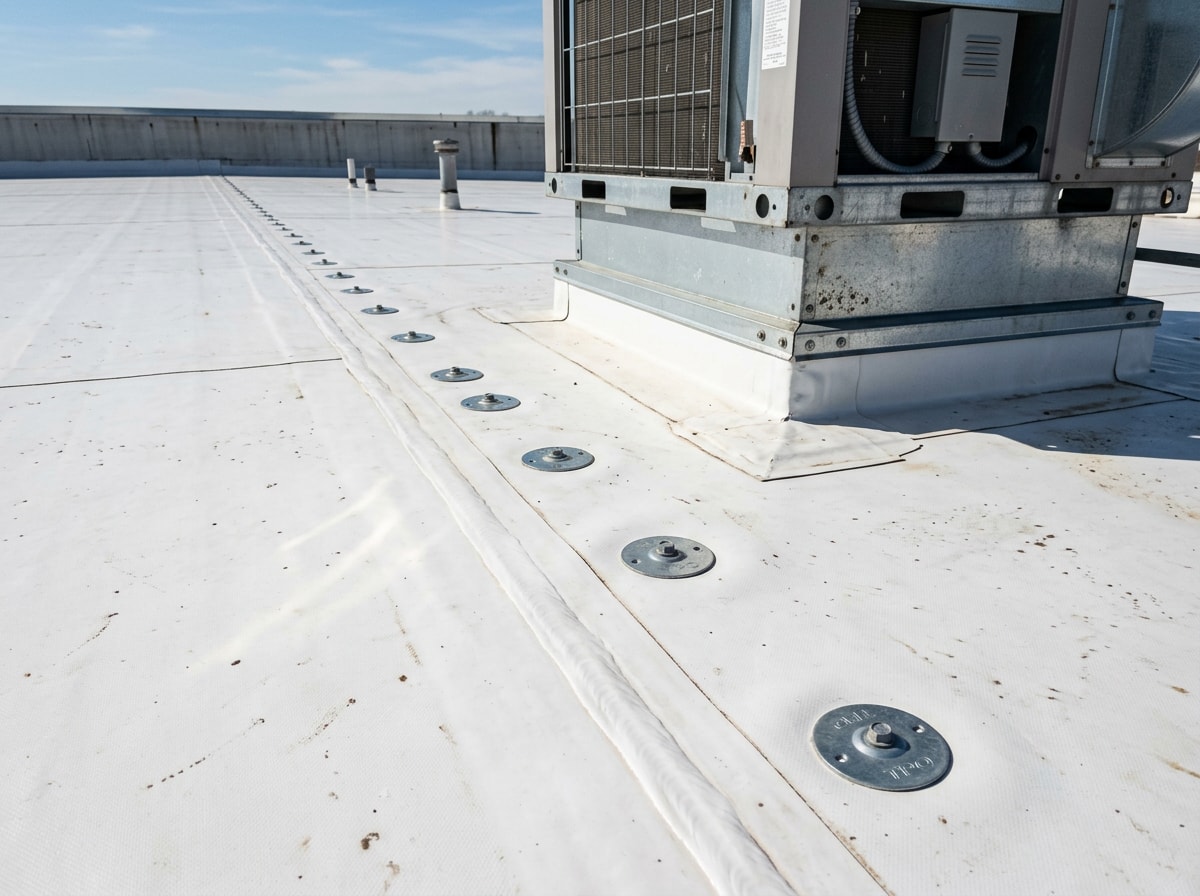
In Sarasota County's coastal wind zone, uplift resistance isn't optional. The wind-borne debris region includes areas within one mile of the coastal mean high water line where the ultimate design wind speed is 130 mph or greater, and any areas where the ultimate design wind speed reaches 140 mph or greater. Much of Sarasota County falls inside that zone, which triggers stricter fastening patterns, edge-metal securement, and product-approval documentation for any new roof system.
Rooftop equipment adds another layer of complexity. HVAC units, exhaust fans, and solar arrays all generate their own uplift forces under code, separate from the membrane itself, so an industrial reroof often needs engineering review for both the field membrane and every piece of rooftop hardware. Combine that with heavy equipment loads and dense penetrations, and industrial roofing becomes far more involved than a typical retail reroof. If you're unsure whether your current system meets current wind-load provisions, a Roof Inspection is the fastest way to find out before hurricane season, not during it.
Installation Process & Permitting in Sarasota County
A sound industrial reroof follows a predictable sequence:
- Roof assessment — deck condition, insulation moisture, drainage slope, and existing penetration count.
- System design — tear-off versus recover, membrane selection, and fastening pattern based on wind-uplift calculations.
- Permitting —
submitting and tracking the building permit through Sarasota County's online permitting portal , which applies to re-roofing, recovering, and any structural repair.
- Installation — phased work that keeps the facility operational, with dry-in inspections at key stages.
- Close-out — final inspection, warranty registration, and as-built documentation for your records.
Sarasota County also offers virtual inspections for dry-in and flashing on re-roof permits, which can shorten the schedule on active facilities. Professional installation protects the manufacturer's warranty, which insurers and lenders typically expect intact before renewing a policy or financing an expansion. For facilities with persistent ponding or aging flashing, a Commercial Roof Replacement is often more cost-effective long-term than repeated patch repairs, and a Commercial Roof Coating can extend the life of a sound membrane that isn't ready for full replacement yet.
Maintenance Schedule for Industrial Roofs
A realistic maintenance plan includes:
- Two inspections per year — pre- and post-hurricane season, at minimum.
- Post-storm walkthroughs after any named system passes within the county.
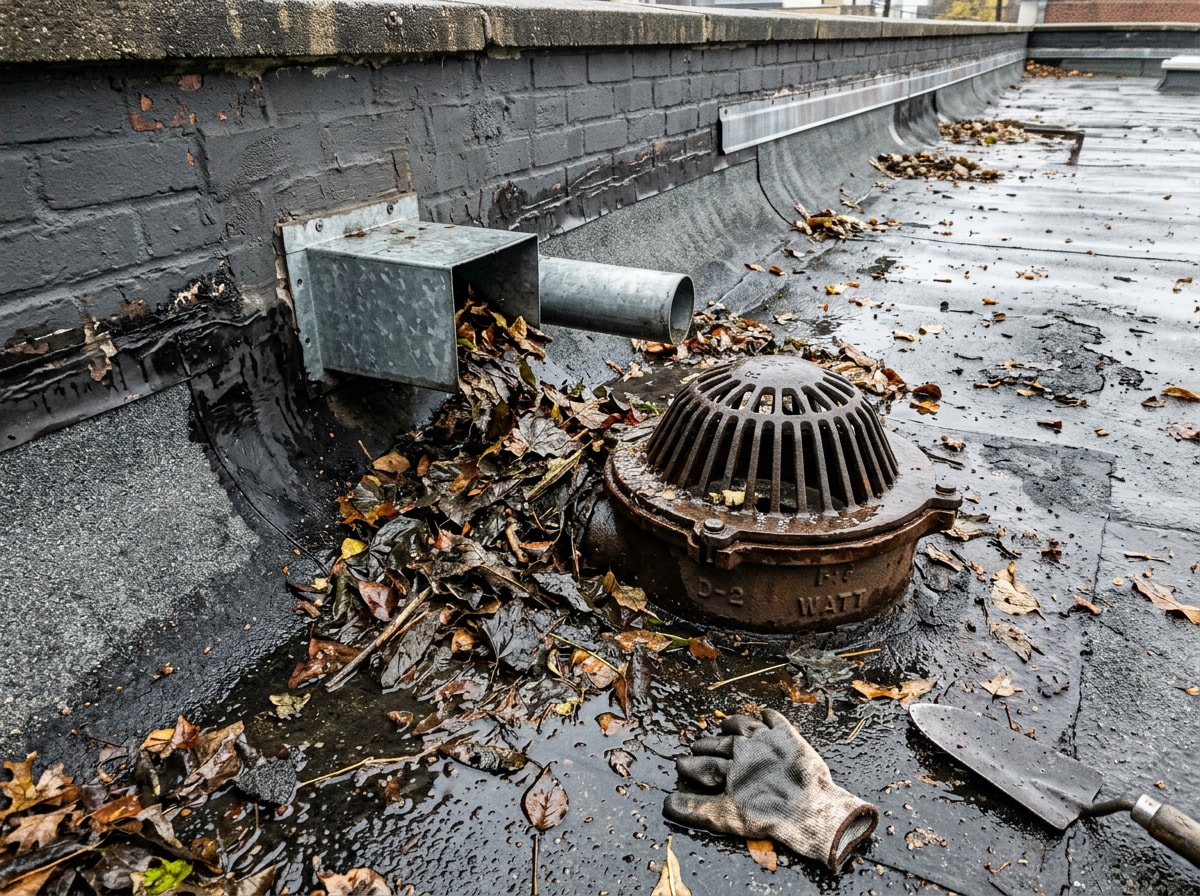
- Drain and scupper clearing on a quarterly basis to prevent ponding.
- Flashing and penetration checks every visit, since most leaks start at seams, not field membrane.
- Debris removal around rooftop equipment that can trap moisture or block drainage paths.
On recent industrial reroofs across Sarasota County, we've found that ponding at HVAC curbs and clogged scuppers cause more emergency calls than membrane failure itself. Catching that early through routine Commercial Roof Maintenance is cheaper than an emergency Flat Roof Repair after a storm.
Choosing an Industrial Roofing Contractor
Before hiring any industrial roofing contractor in Sarasota County, confirm active licensing and insurance directly through the state registry rather than taking a sales rep's word for it. Licensing alone isn't enough, though; ask specifically about experience with large-scale, low-slope systems, since industrial roofs behave differently than a smaller retail building.
Look for:
- Documented wind-uplift testing and fastening patterns matching your building's risk category.
- A track record of warranty-compliant installations with the manufacturer named on paper, not just verbally.
- Clear communication on permitting timelines through Sarasota County's process.
- References from other industrial or warehouse clients, not just residential jobs.
We serve facilities throughout Sarasota County, FL, including Venice, North Port, and Lakewood Ranch, and our crews are familiar with the local permitting process and wind-code requirements specific to this stretch of the Gulf Coast.
About the Author
This guide was written by the commercial roofing team at Avery Roof Services, a Florida-licensed roofing contractor serving Sarasota and Manatee Counties. Our crews install and maintain TPO, EPDM, metal, and modified bitumen systems on warehouses and industrial facilities throughout the region. For a deeper look at contractor licensing requirements in this market, see our Licensed Roofing Contractors in Manatee County, FL guide. Questions about a specific project can go straight to our team via Contact us.
FAQ
What is industrial roofing?
Industrial roofing refers to large, low-slope roof systems on warehouses, manufacturing plants, and distribution centers. These roofs typically carry more rooftop equipment, more penetrations, and heavier structural loads than a standard commercial building.
What is the best roofing material for an industrial building in Sarasota County?
There's no single best answer. TPO and EPDM both perform well in Florida heat and offer 20 to 40+ years of service depending on thickness and installation quality. Metal lasts longest overall but costs more upfront. The right choice depends on your building's slope, equipment load, and budget horizon.
How much does industrial roof replacement cost?
Costs vary widely based on square footage, deck condition, insulation needs, and the number of rooftop penetrations. Request a free estimate for an accurate number specific to your facility rather than relying on a generic per-square-foot average.
How often should an industrial roof be inspected in Sarasota County?
At minimum, twice a year, before and after hurricane season, plus a walkthrough after any major storm. Facilities with heavy rooftop equipment or known ponding issues often benefit from quarterly checks.
Do industrial roofs in Sarasota County require a permit?
Yes. Re-roofing, recovering, and most structural roof repairs require a permit through Sarasota County's building division before work begins.
What's the difference between commercial and industrial roofing?
Commercial roofing covers a broad range of business properties, including retail and office buildings. Industrial roofing specifically refers to facilities like warehouses and manufacturing plants, which typically have larger roof decks, denser equipment penetrations, and higher structural demands.