TPO roof installation in Lakewood Ranch, FL has to clear three hurdles that generic roofing guides skip entirely: HOA architectural review, Manatee County permitting, and a climate that punishes low-slope membranes faster than almost anywhere else in the state. Whether you're replacing an aging flat section, roofing a new lanai addition, or managing a commercial building along one of the area's growth corridors, the right membrane and the right installer make the difference between a smooth project and a stalled one. This guide breaks down what TPO is, what it costs in 2026, and what to check before you sign a contract.
What Is TPO Roofing?
TPO (thermoplastic polyolefin) is a single-ply membrane built for flat and low-slope roofs. It ships in wide reinforced sheets and gets installed with heat-welded seams that fuse adjoining panels into one continuous, watertight surface instead of relying on overlaps or adhesive alone.
Installation follows a set sequence:
- Insulation board goes down over the prepared deck.
- TPO sheets roll out and attach either mechanically (plates and screws into the deck) or fully adhered with bonding adhesive for a lower-profile finish.
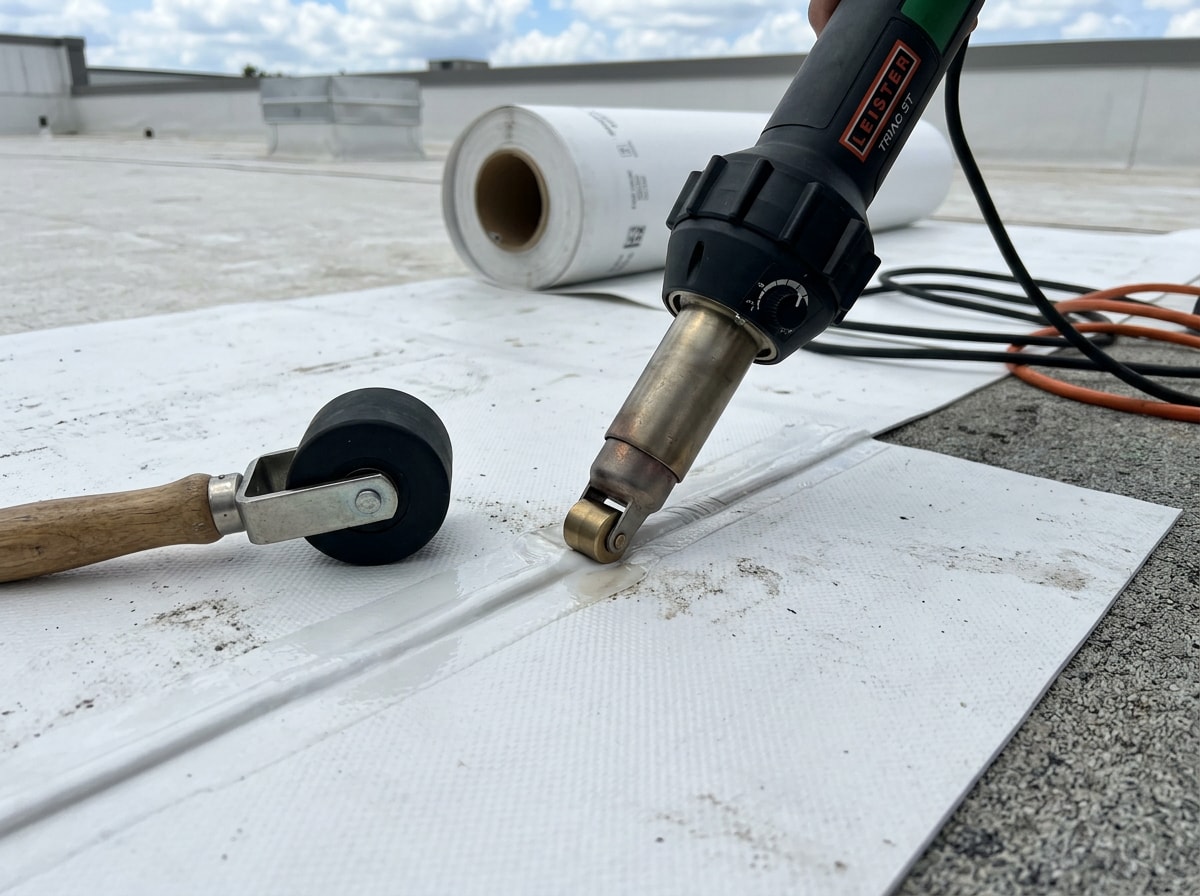
- A hot-air welding tool melts adjoining seams together, a bond that often outperforms the membrane itself.
- Flashing around drains, vents, and parapet walls gets the same heat-welded treatment.
That seam-welded approach is what gives flat roof systems far fewer failure points than older built-up roofing. The EPA's research on reflective roofing confirms the energy side of the equation too: cool, reflective roof surfaces like white TPO can stay dramatically cooler than darker membranes during peak summer heat, which is a big part of why TPO dominates flat-roof installs across Florida's Gulf Coast.
HOA, Permits & Manatee County Code Requirements
Lakewood Ranch roofing isn't like roofing in most Florida towns. Many villages fall under architectural review boards, and exterior work, including roof replacement, typically needs sign-off before a crew shows up.
Architectural Review
Material choices, color palettes, and contractor qualifications all factor into HOA review. Some communities grant exceptions for flat TPO sections hidden behind parapet walls. Others require the same design submittal as a full reroof.
Review timelines range from about a week to a full design cycle. Incomplete submittals, not the roofing material itself, are the most common reason approval gets delayed. Having sample color and profile documentation ready in advance speeds the process up. Our Lakewood Ranch roofing team tracks these village-specific rules before work starts, which keeps a project moving instead of sitting in committee.
Manatee County Permits and Inspections
A TPO reroof or replacement requires a Manatee County roofing permit before work begins, plus scheduled inspections, typically a dry-in or deck inspection and a final roof inspection once the membrane is complete. The Manatee County Building Division handles this process for unincorporated areas, including Lakewood Ranch.
Skipping or failing a required inspection can void both the manufacturer's and workmanship warranties. It can also complicate a future sale or insurance claim.
The 25% Rule and Storm-Ready Seams
Florida's building code limits how much of a roof section can be repaired, replaced, or recovered in a 12-month period before the full section must meet current code. Under Section 553.844(5) of the Florida Statutes, roofs already built or reroofed to the 2007 Florida Building Code or later only need the repaired portion brought up to current standards, even past that 25% threshold. Roofs installed before March 1, 2009 still fall under the older, stricter version of the rule.
That code history matters for storm readiness, too. Heat-welded TPO seams fuse into one continuous sheet, reducing the weak points wind can exploit. Every installation should carry a documented wind uplift rating matched to the building's height and exposure category, since fastening patterns are tied directly to wind zone.
Signs You Need TPO Roof Installation or Replacement
Flat roofs show wear differently than shingles do. Watch for:
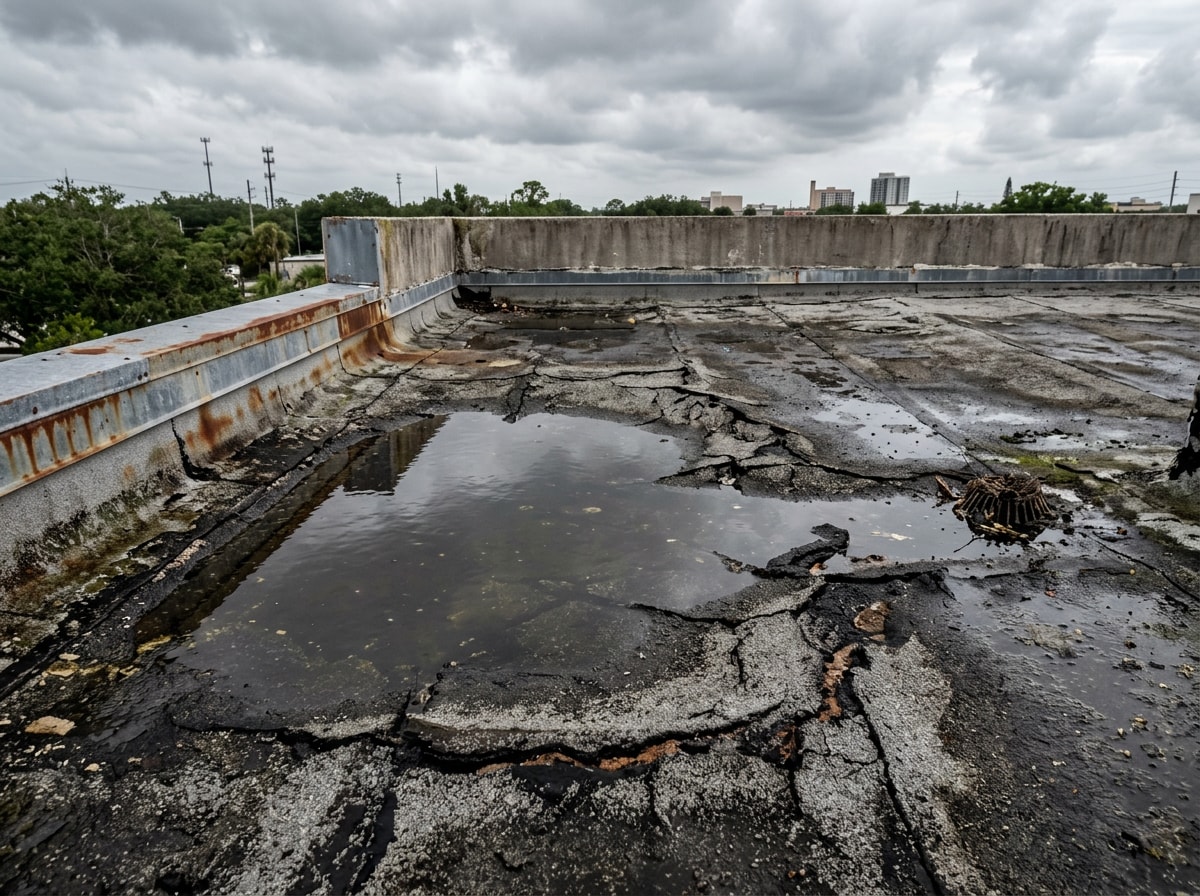
- Ponding water that lingers more than 48 hours after rain, usually a sign older built-up roofing has lost its slope to drain.
- Separating seams on aging modified-bitumen systems, which tend to fail well before the rest of the membrane does.
- Recurring leaks around a lanai or addition, often storm damage rather than age, since wind-driven rain finds weak flashing fast.
- Rising energy bills paired with a roof over 15 to 20 years old.
- Visible membrane cracking, blistering, or granule loss on the flat section.
Switching to a heat-welded TPO roof replacement addresses the actual failure mode instead of buying another season with a patch.
Benefits of TPO Roofing in Florida's Climate
Energy Efficiency
TPO membranes are typically white or light-colored, reflecting sunlight rather than absorbing it. That keeps the deck cooler, which lowers cooling costs for whatever sits underneath, a home, office suite, or retail space. In Florida, where air conditioning is often the biggest utility expense, that reflectivity shows up on the power bill within the first few summer cycles, though results vary with insulation and building use.
Durability and Weather Resistance
Florida's climate stresses roofing in three distinct ways: intense UV, sudden downpours, and seasonal wind. TPO holds up well against all three. The membrane resists UV degradation, sheds heavy rain through its heat-welded seams, and handles wind uplift when installed to spec. It also resists mold, dirt buildup, and punctures better than older single-ply materials.
Cost-Effective Installation
Among common low-slope options, TPO generally runs lower than PVC or EPDM at comparable thickness. Lighter sheet weight speeds up installation, and heat-welded seams require less specialized labor than some adhesive-based systems.
2026 TPO Roof Installation Cost in Lakewood Ranch
Pricing varies by membrane thickness, attachment method, insulation needs, and deck condition. As a planning range, most 2026 industry cost guides put mechanically attached TPO in this ballpark:
| Membrane Thickness | Typical Installed Cost (per sq ft) | Best For |
|---|---|---|
| 45-mil | $5.50 – $7.50 | Budget-conscious flat sections, light foot traffic |
| 60-mil | $7.00 – $9.50 | Most common choice, balance of cost and durability |
| 80-mil | $8.50 – $11.50 | High-traffic commercial roofs, longest warranty terms |
Tear-off, deck repair, insulation upgrades to meet current R-value code, and difficult access can push a project toward the higher end. These are national planning figures, not a quote. Deck condition and insulation needs can shift a Lakewood Ranch project several dollars per square foot in either direction, so a site visit is the only way to get an accurate number. Request a free estimate for a figure specific to your roof.
Residential TPO Applications in Lakewood Ranch
TPO isn't only a commercial material. Residential projects increasingly use it on flat sections: enclosed lanais, pool cabanas, and flat additions built onto an otherwise sloped house, all exposed to the same sun and rain as a commercial roof. Our roofing contractor team handles these flat-section installs alongside standard sloped-roof work.
Roof Over (Recover)
A roof over installs a new TPO membrane directly over an existing flat section instead of a full tear-off. It's faster and less disruptive, which makes it appealing for additions with a sound deck. Not every roof qualifies, though. Trapped moisture or structural damage underneath means a recover will seal problems in rather than solve them. An honest roof inspection before the job starts settles that question.
Commercial TPO Roofing Services
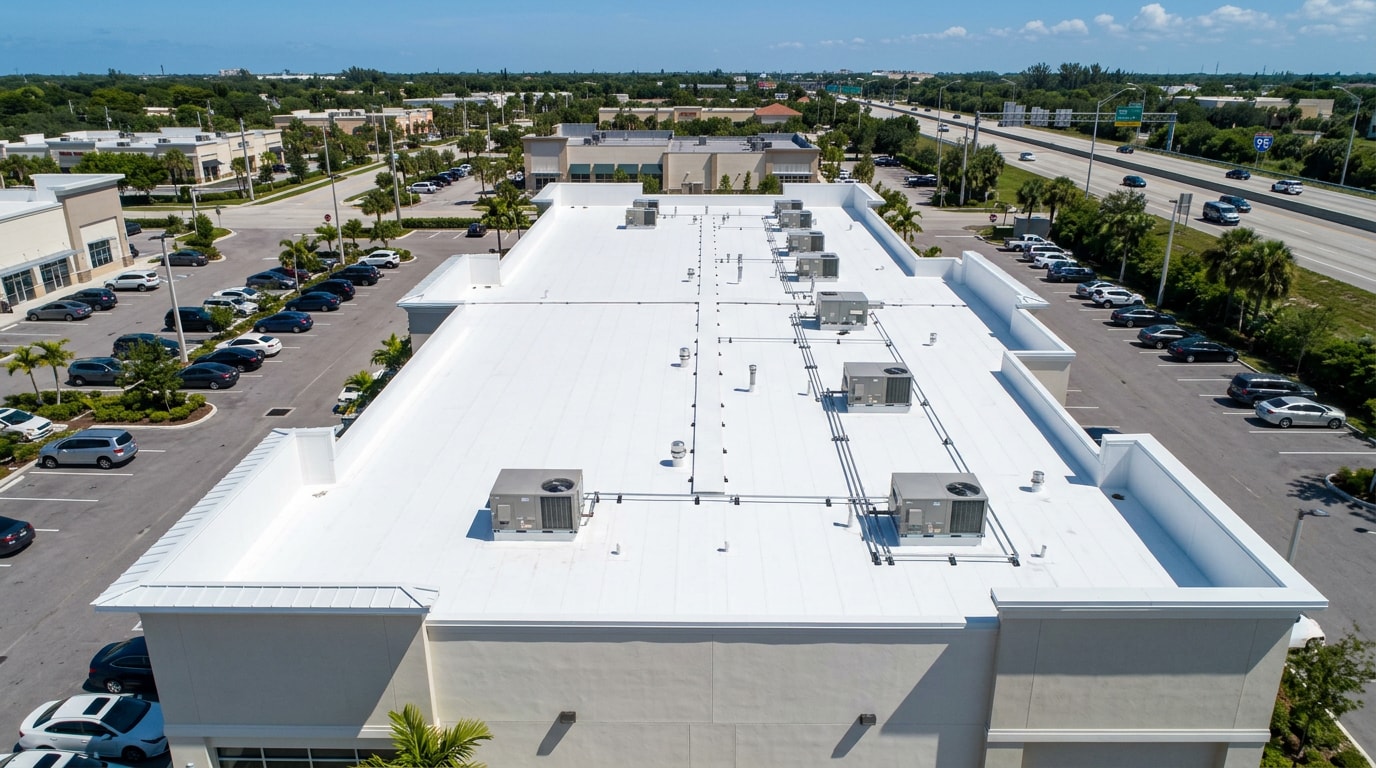
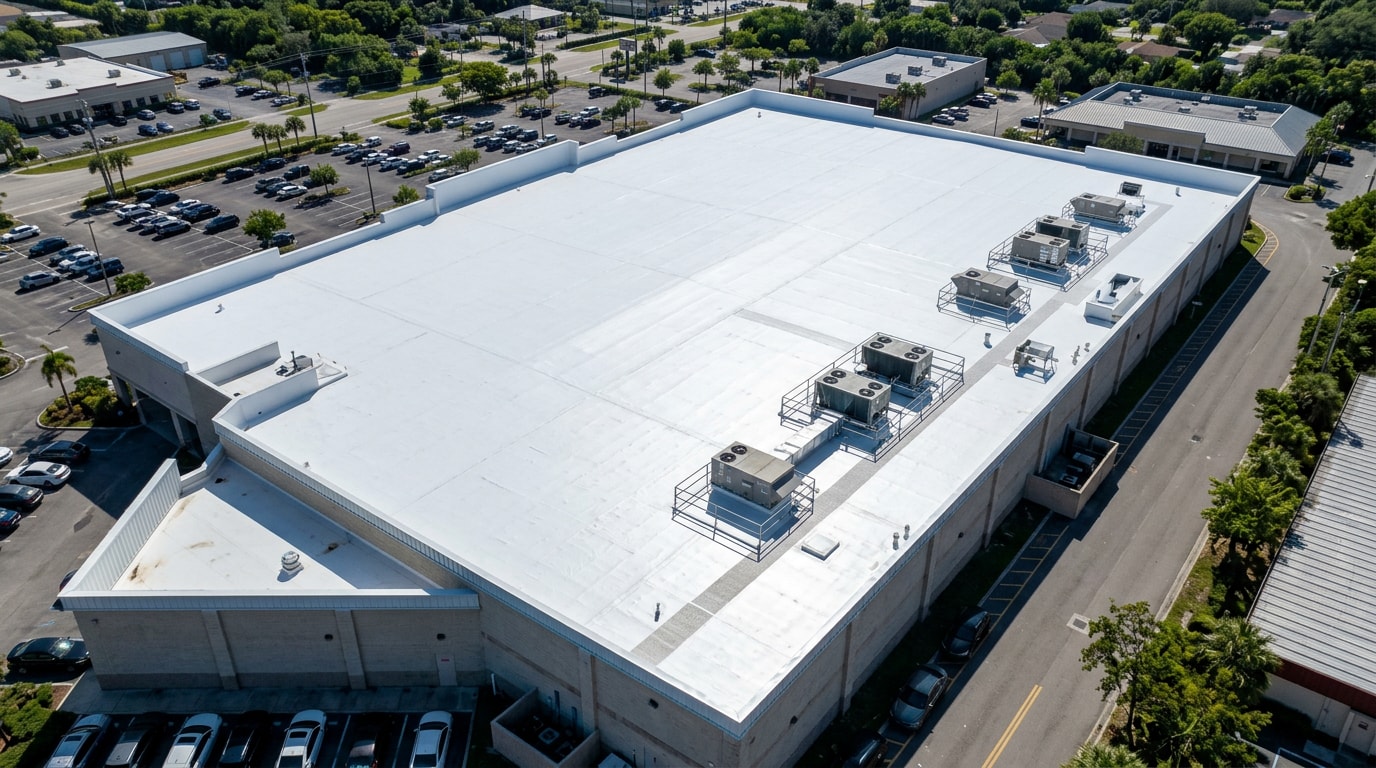
Retail centers, medical offices, and mixed-use buildings along Lakewood Ranch's commercial corridors specify TPO most often for new low-slope construction and reroofs. Code requirements for these occupancy types generally call for a documented, code-compliant system, and TPO fits that need for most building types. Our commercial roofing contractor crews work on everything from single-tenant retail to multi-building complexes.
Most repair calls fall into a few categories:
- Seam separation where a heat-weld has failed over time.
- Membrane punctures from foot traffic or dropped equipment.
- Flashing failures around rooftop units and drains.
A targeted commercial roof repair or flat roof repair can resolve any of these without disturbing the rest of the membrane, assuming surrounding material is still sound.
Full commercial roof replacement becomes the better option once damage is widespread: repeated leaks in different spots, a membrane nearing the end of its rated lifespan, or damage covering a large share of the surface. That ties directly back to the 25% code threshold covered above.
Why Lakewood Ranch Property Owners Choose Avery Roof Services
Picking a contractor for TPO work comes down to more than price. Local permitting knowledge, HOA experience, and storm-readiness all affect how smoothly a project goes and how the roof performs afterward.
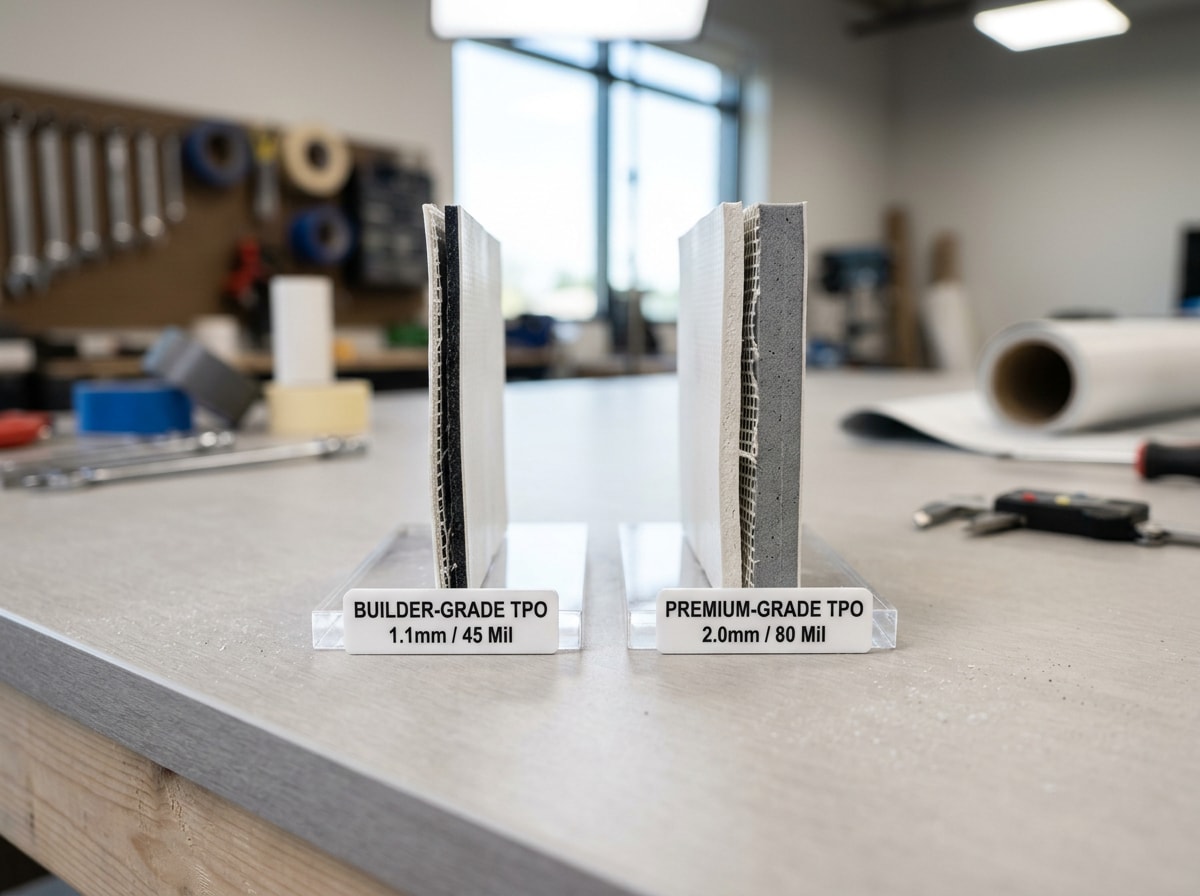
On the builder-grade roofs we inspect across Lakewood Ranch, the original developer-installed TPO is almost always a thinner 45-mil product rather than a premium membrane. Upgrading typically means thicker mil thickness, a stronger manufacturer warranty, and sometimes an enhanced reflective coating. For homeowners replacing a roof nearing the end of its builder-grade lifespan, the upgrade cost is often modest against the extended warranty coverage gained.
Our team at Avery Roof Services is licensed to work throughout Manatee County, and we handle the permit filing and HOA documentation as part of every TPO project rather than leaving it to the homeowner to chase down. If you want a second opinion on an aging membrane or a straight answer on what your HOA will require, contact us and we'll walk the roof with you. For a look at how flat and specialty roofing compares in this same market, see our guide on polycarbonate roofing sheets in Lakewood Ranch.
FAQ
What is the average lifespan of a TPO roof membrane?
A properly installed TPO membrane typically lasts 20 to 30 years, depending on thickness, installation quality, and sun exposure. Thicker membranes, 80-mil versus 45-mil for example, generally outlast thinner ones, and roofs with regular inspections tend to reach the higher end of that range. Poor installation or deferred maintenance can shorten lifespan by several years.
What's the difference between TPO, PVC, and EPDM roofing?
All three are single-ply membranes, but they differ in seam method and chemical resistance. TPO and PVC both use heat-welded seams and resist UV well; PVC adds stronger chemical resistance, which matters for restaurants with grease exhaust. EPDM is typically glued or taped at the seams rather than heat-welded, and it's usually black, which absorbs more heat than white TPO.
Do I need a permit for TPO roof installation in Lakewood Ranch?
Yes. A TPO reroof or replacement requires a Manatee County building permit and scheduled inspections before the job is considered complete. Skipping this step can void manufacturer and workmanship warranties and create problems during a future home sale.
What type of roof is best for Florida weather?
It depends on slope more than preference. TPO performs well on flat and low-slope sections, offering strong UV and wind resistance, but it isn't a substitute for tile, metal, or shingle on a sloped roof. Metal and tile tend to lead on steep slopes, while TPO remains the standard for flat commercial and addition roofs.
What is the 25% rule in roofing?
Florida's building code limits repairs, replacement, or recovery to 25% of a roof section in any 12-month period unless the entire section is brought up to current code. If the existing roof was permitted under the 2007 Florida Building Code or later, only the repaired portion needs to meet current code, even past that threshold. Roofs from before March 1, 2009 still fall under the stricter original rule. A licensed contractor should confirm which version applies before scoping any project.
How much does it cost to roof a 1,500 sq ft house in Florida?
TPO is usually priced per flat-roof section rather than an entire sloped-roof home, so a whole-house number rarely applies evenly. For a 1,500-square-foot flat or low-slope section, expect a range from several thousand dollars into the low five figures depending on membrane thickness, insulation needs, and deck condition. A site-specific estimate is the only reliable way to know your actual cost.
Do you provide warranties on TPO roofing work?
TPO installations typically carry two separate warranties: a manufacturer's warranty covering the membrane material and a workmanship warranty covering the installer's labor. Terms and length vary by manufacturer and membrane thickness, and most require registration within a set window after installation to stay valid.