Commercial flat roofing contractors North Port, FL property owners hire need to understand more than shingles. Flat and low-slope roofs here face constant sun, seasonal downpours, and hurricane-season wind loads that sloped residential roofs rarely see. This guide breaks down the systems, pricing ranges, and local code rules that shape every commercial flat roof project in Sarasota County, so you can vet a contractor before you sign anything.
Commercial Flat Roof Services in North Port
Commercial flat-roof clients typically need more than a one-time repair call. A contractor should offer full-scope commercial roofing services, from routine maintenance to complete system replacement and storm recovery.
Here's the core menu most North Port commercial properties rely on:
- Commercial roof repair: Targets predictable failure points, ponding water, seam separation, and foot-traffic punctures, before a small leak becomes a tenant complaint.
- Commercial roof replacement: The right call once repairs become frequent, the membrane is past its rated life, or moisture has reached the insulation.
- Flat roof repair: Membrane-specific patching and seam work that differs from sloped-roof repair methods.
- Free roof inspection: Checks membrane condition, seam integrity, drainage slope, and flashing before you decide between repair and replacement.
- Commercial roof coating: Extends service life on roofs that aren't ready for full replacement.
- Commercial roof maintenance: Scheduled checkups that catch small problems before storm season turns them into big ones.
After wind or storm damage, documenting a commercial roof insurance claim correctly matters as much as the repair itself. Experienced contractors help with damage photos, scope estimates, and adjuster communication so claims move faster. For membrane-specific repair strategies, see our flat roof repair options guide.
Flat Roofing Systems Compared
Commercial flat roofing isn't one product. It's a category of membrane and built-up systems, each with different cost, lifespan, and performance tradeoffs. Here's how the main options stack up for North Port's climate.
| System | Typical Lifespan | Relative Cost | Best For |
|---|---|---|---|
| TPO | 20-25 years | Mid-range | Reflective surface, heat-welded seams, most commercial buildings |
| EPDM | 20-25 years | Most affordable | Ponding-prone roofs, budget-conscious projects (black surface absorbs more heat) |
| PVC | 20-30 years | Higher | Restaurants, grease exposure, chemical or fire-rating requirements |
| Modified Bitumen | 15-20 years | Mid to higher | Heavy foot traffic, restoration over existing BUR |
| BUR | 20-30 years | Mid-range (repair) | Older buildings where the system is already performing well |
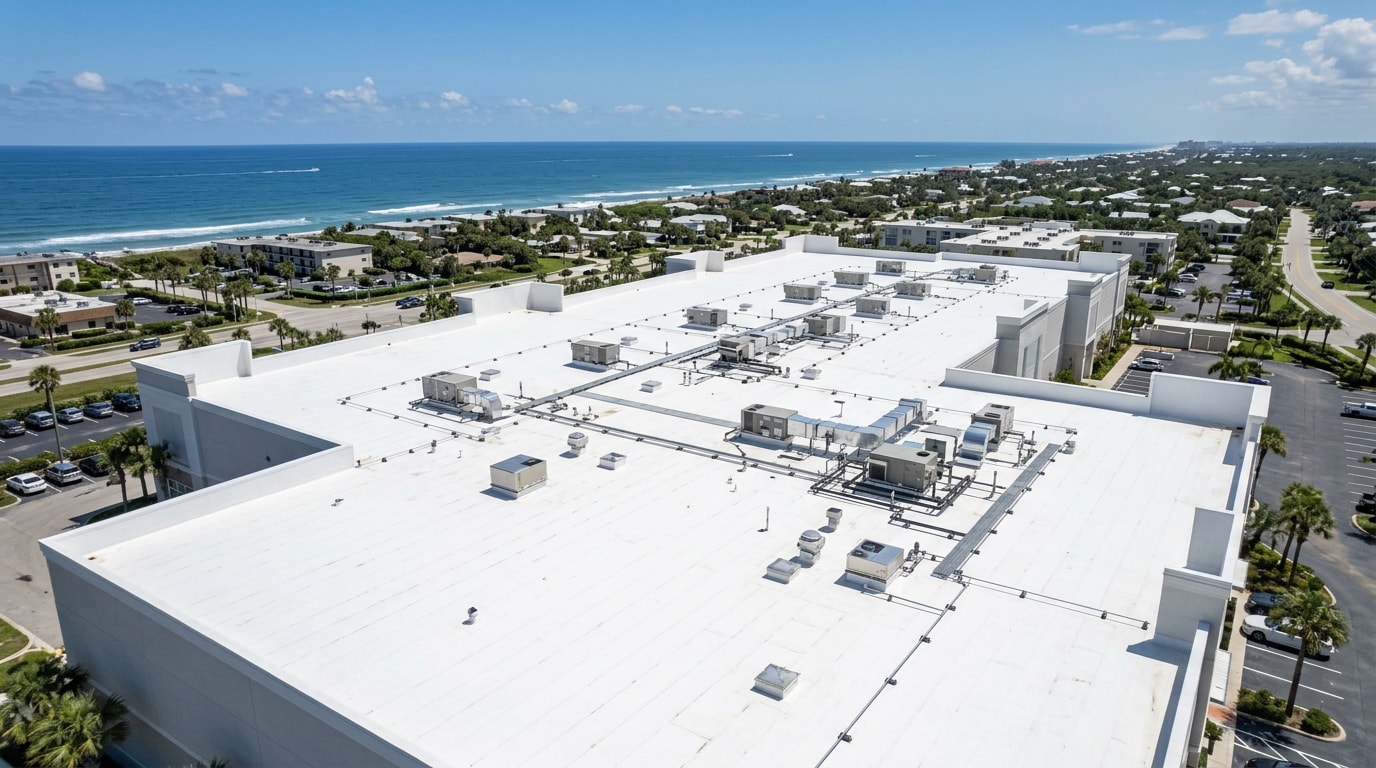
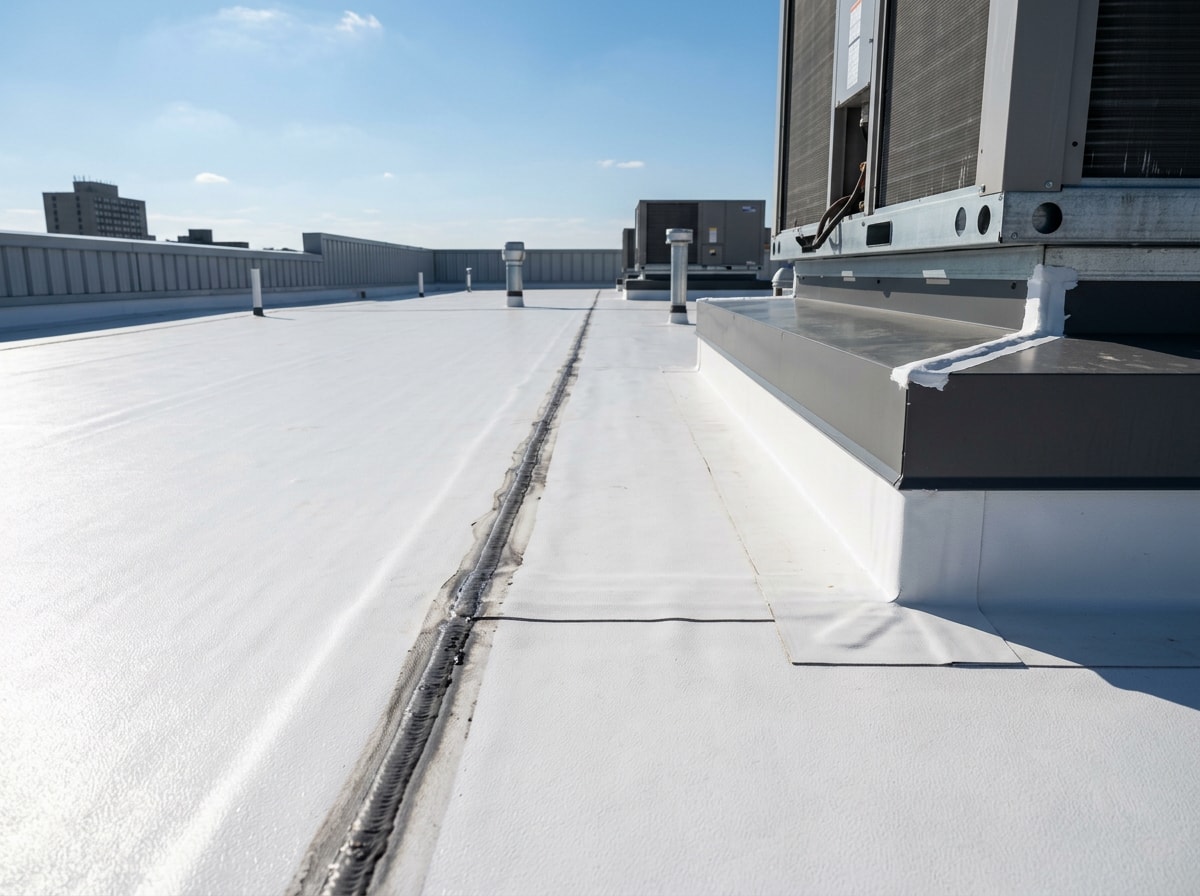
TPO (thermoplastic polyolefin) uses heat-welded seams that resist water intrusion better than adhered seams, and its reflective white surface helps lower rooftop surface temperatures in Florida's intense sun. That reflectivity benefit is well documented in the Department of Energy's cool roof guidance, which notes that reflective roofing can stay dramatically cooler than dark surfaces during peak sun hours.
EPDM is a synthetic rubber membrane that's been used on commercial flat roofs for decades. It handles ponding water and thermal movement well, but most EPDM is black, which absorbs more heat than reflective TPO or PVC.
PVC membranes resist chemicals, grease, and fire better than TPO or EPDM. That makes them common on restaurants, industrial buildings, and properties with rooftop exhaust systems.
Modified bitumen combines asphalt with rubber or plastic polymers applied in layers. It's durable and puncture-resistant, suited to buildings with heavy rooftop foot traffic, and often installed over an existing BUR system during restoration rather than a full tear-off.
Built-up roofing, the classic layered system of asphalt and gravel, is still found on older commercial buildings throughout North Port. It's heavy and durable with a long track record, though lighter single-ply systems have largely replaced it on new construction.
Why Property Owners Choose Avery Roof Services
Commercial property owners evaluate contractors differently than homeowners do. Licensing and insurance are table stakes. The real questions involve warranty strength, crew responsiveness, and whether the contractor has handled projects at your building's scale.
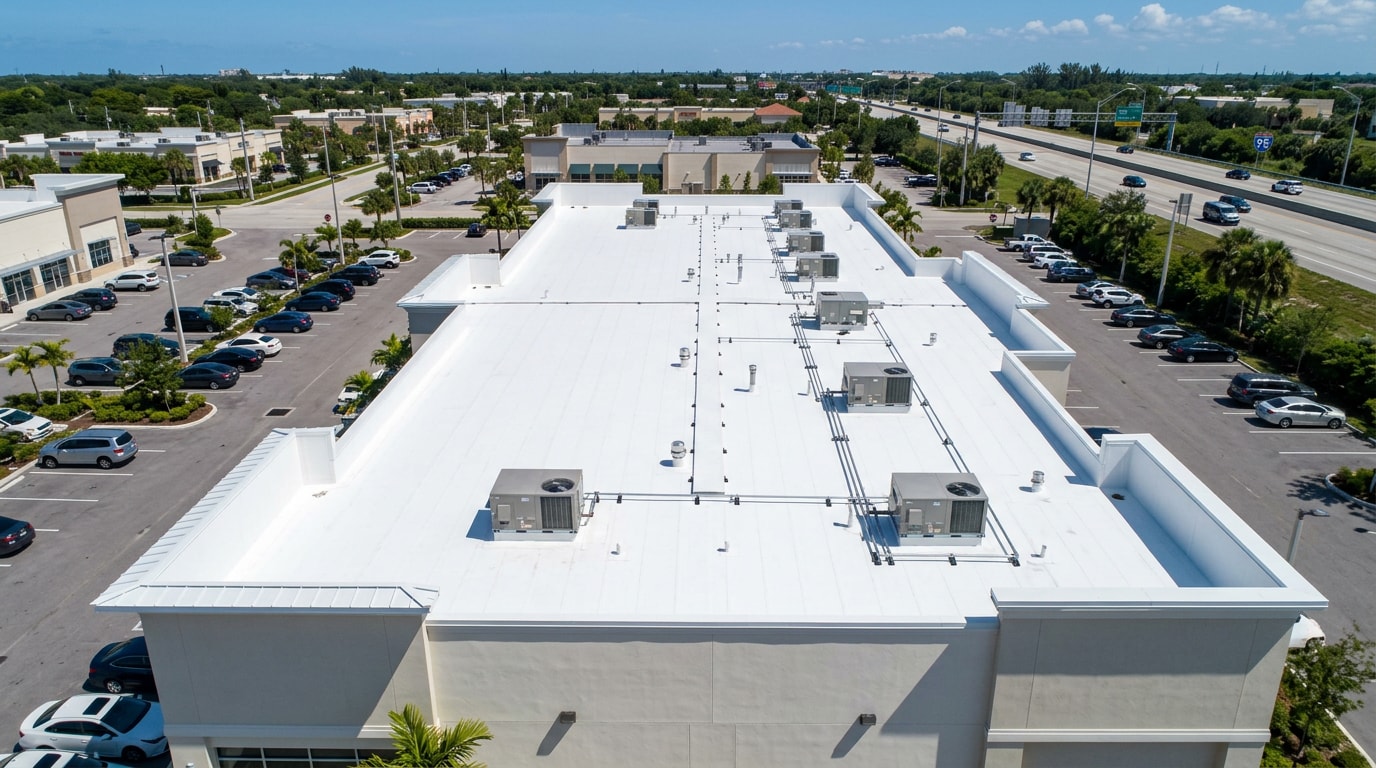
Our licensed, insured crews have repaired and recoated flat commercial roofs across Sarasota and Manatee counties, including post-storm TPO and coating work on strip-mall buildings along the US-41 corridor. That hands-on experience is what tells us whether a roof needs a patch, a coating, or a full tear-off, not just a sales pitch.
Look for a contractor with documented commercial experience and manufacturer-backed warranties. A contractor North Port businesses return to repeatedly usually wins on communication as much as workmanship: clear timelines, documented inspections, and a single point of contact through the whole project. Get a free estimate before your next budget cycle locks in a repair decision.
What North Port's Building Stock Means for Your Project
North Port's commercial building stock is a mix of eras, and that matters more than most contractors admit.
Older strip-mall and retail buildings along established corridors often still carry original built-up or aging modified bitumen roofs. Many are past their rated service life and show ponding issues the original design never solved.
Newer commercial construction around Wellen Park and the West Villages tends to use modern TPO systems installed to current wind-uplift standards. Even these need periodic inspection, since installation quality varies between builders.
Commercial-association and property-management approval processes add another layer most residential-focused contractors aren't used to navigating. Multi-tenant retail centers and business parks often require board sign-off and scheduling coordination that single-family homeowners never deal with. A contractor who's worked through these steps before keeps a project on schedule.
Our Commercial Roofing Process
Every commercial roofing project should follow a clear, predictable sequence from first phone call to final sign-off.
- Free roof estimate: An on-site evaluation of your roof's condition, square footage, and system options, with no obligation to move forward.
- Detailed proposal: A written scope of work, materials, system specs, timeline, and pricing, so there's no ambiguity before work begins.
- Scheduling and preparation: Projects are often phased or scheduled after hours to minimize disruption to tenants and daily operations.
- Expert installation: Trained crews follow manufacturer specifications for seam welding, flashing details, and insulation layout, since small installation errors can shorten a commercial roof's lifespan.
- Final walkthrough and warranty: A closeout walkthrough confirms the work meets spec. Most commercial installations include a workmanship warranty plus a manufacturer material warranty, often 10 to 20-plus years.
Ready to start? Request your free commercial roof estimate and we'll walk the roof with you before recommending a system.
How North Port Weather Impacts Your Commercial Roof
North Port's climate puts specific stress on flat commercial roofing that sloped residential roofs rarely experience. Year-round UV exposure breaks down membrane surfaces over time, while summer downpours test drainage systems with little margin for ponding.
Hurricane season adds wind-uplift stress at seams, edges, and rooftop equipment curbs, the same spots where most failures start. The National Weather Service's Saffir-Simpson Hurricane Wind Scale shows that even a Category 1 storm brings sustained winds of 74 mph or higher, strong enough to test a roof's uplift rating. That's why commercial systems here should meet current wind-resistance standards rather than older code minimums.
North Port Commercial Service Areas
Commercial flat-roof work in North Port concentrates around a few key business corridors, each with its own mix of building ages and roof types.
- US-41 Commercial Corridor: A dense concentration of retail centers, medical offices, and strip-mall buildings, many with flat roofs installed decades ago. These are frequent candidates for replacement or coating programs rather than simple patch repairs.
- West Villages / Wellen Park Corridor: Newer commercial construction generally features modern TPO or PVC systems still within their early service life, though periodic inspection still matters.
We also serve surrounding North Port and Sarasota County commercial properties, including multi-building business parks and retail strips.
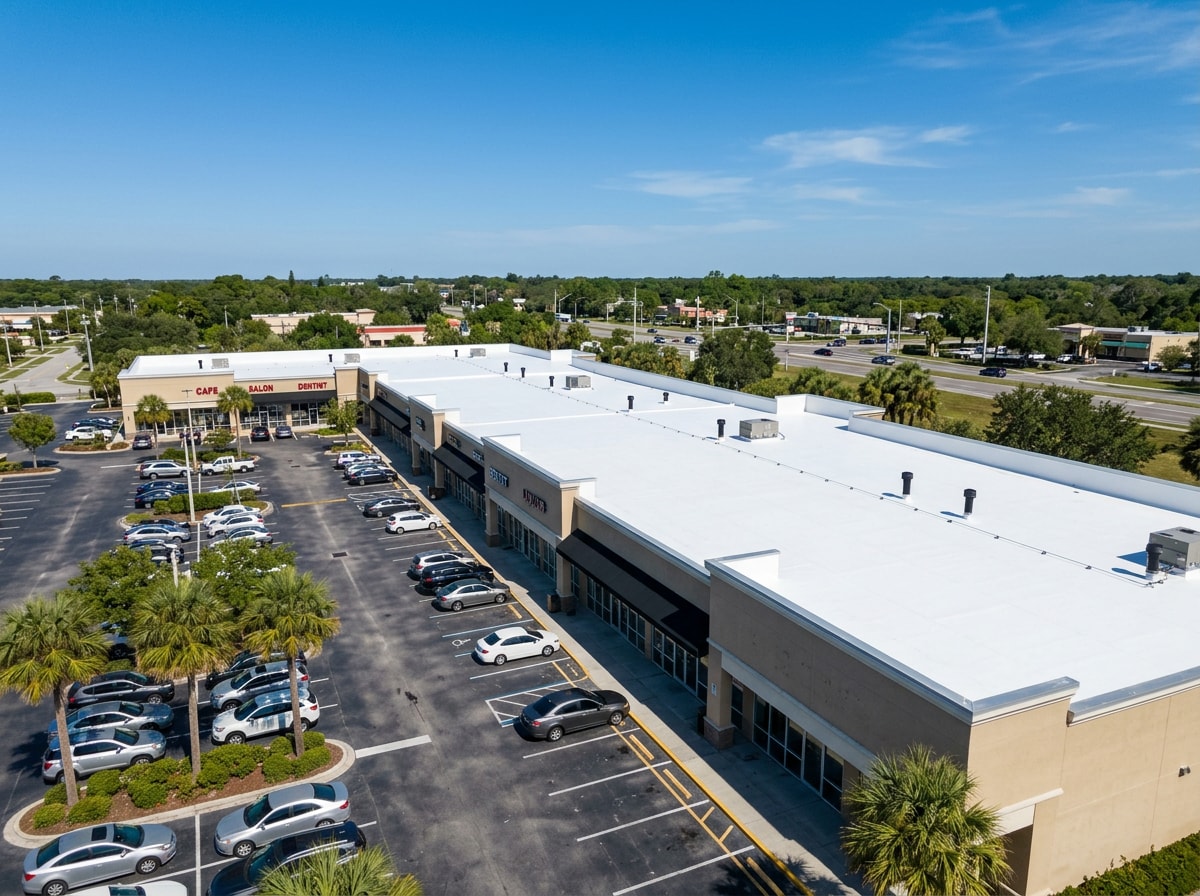
Commercial Roofing Projects in North Port
Commercial roofing projects here typically range from single-building retail re-roofs to multi-building business park replacements spanning tens of thousands of square feet. Expect to see TPO replacements on strip-mall roofs, emergency tarping after storm events, and coating applications extending the life of older BUR systems across the area's commercial corridors.
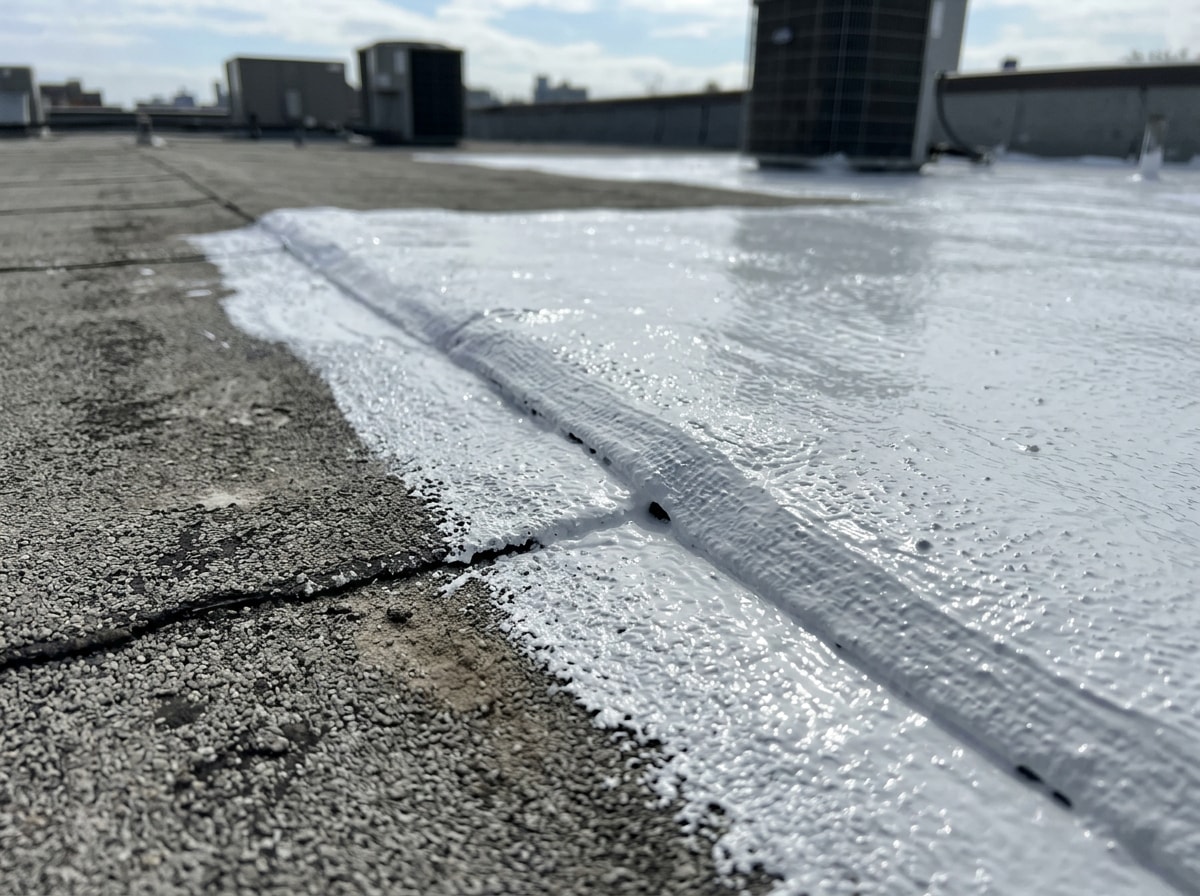
Property managers consistently value contractors who document progress, communicate clearly, and stick to the agreed timeline with minimal disruption to daily operations. If you manage a multi-tenant property, start with a free roof inspection to get a baseline before your next budget cycle.
FAQ
What Are Commercial Flat Roofs Called?
Commercial flat roofs are generally called low-slope or membrane roofs in the industry, since few roofs are perfectly flat. Common system names include TPO, EPDM, PVC, modified bitumen, and built-up roofing (BUR), each a different material suited to low-slope commercial applications.
What Is the 25% Roof Rule in Florida, and Does It Still Apply?
The Florida Building Code's 25% rule historically required that if more than 25% of a roof section was repaired, replaced, or recovered in a 12-month period, the entire section had to be brought up to current code. That changed in 2022 under Senate Bill 4-D. Under current Florida Statute 553.844(5), if a roofing system or section was built, repaired, or replaced in compliance with the 2007 Florida Building Code or any later edition, only the newly repaired portion must meet current code, not the entire roof. Roofs that predate 2009 compliance, or that were never properly permitted, may still fall under the older full-section rule. An on-site review of your permit history is the only reliable way to know which version applies to your building.
What Is the Average Cost of Replacing a Flat Roof in Florida?
Commercial flat roof replacement costs vary widely by system, square footage, and existing roof condition. As a rough framework, EPDM tends to be the most affordable per square foot, TPO falls in the middle, and PVC or modified bitumen systems often cost more. An on-site estimate is the only reliable way to know actual pricing for your building.
How Long Does a Sarasota County Roofing Permit Take for Commercial Properties?
Commercial roofing permits in Sarasota County typically take anywhere from a few days to several weeks, depending on project scope and plan review requirements. Larger or more complex projects generally need more detailed review, so it's wise to build extra time into your schedule.
How Often Should a Commercial Flat Roof Be Inspected in Florida?
Most manufacturers and insurers recommend at least two inspections a year for commercial flat roofs in Florida: one before hurricane season and one after, plus a walk-through after any major storm. Buildings with heavy rooftop equipment or frequent foot traffic often benefit from quarterly checks.
Is a Licensed Contractor Required for Commercial Roofing in Florida?
Yes. Florida requires roofing contractors to hold a state license (certified or registered) to perform commercial roofing work legally. Always verify a contractor's license number and insurance before signing a contract, and ask for proof of manufacturer certification on the specific membrane system being installed.