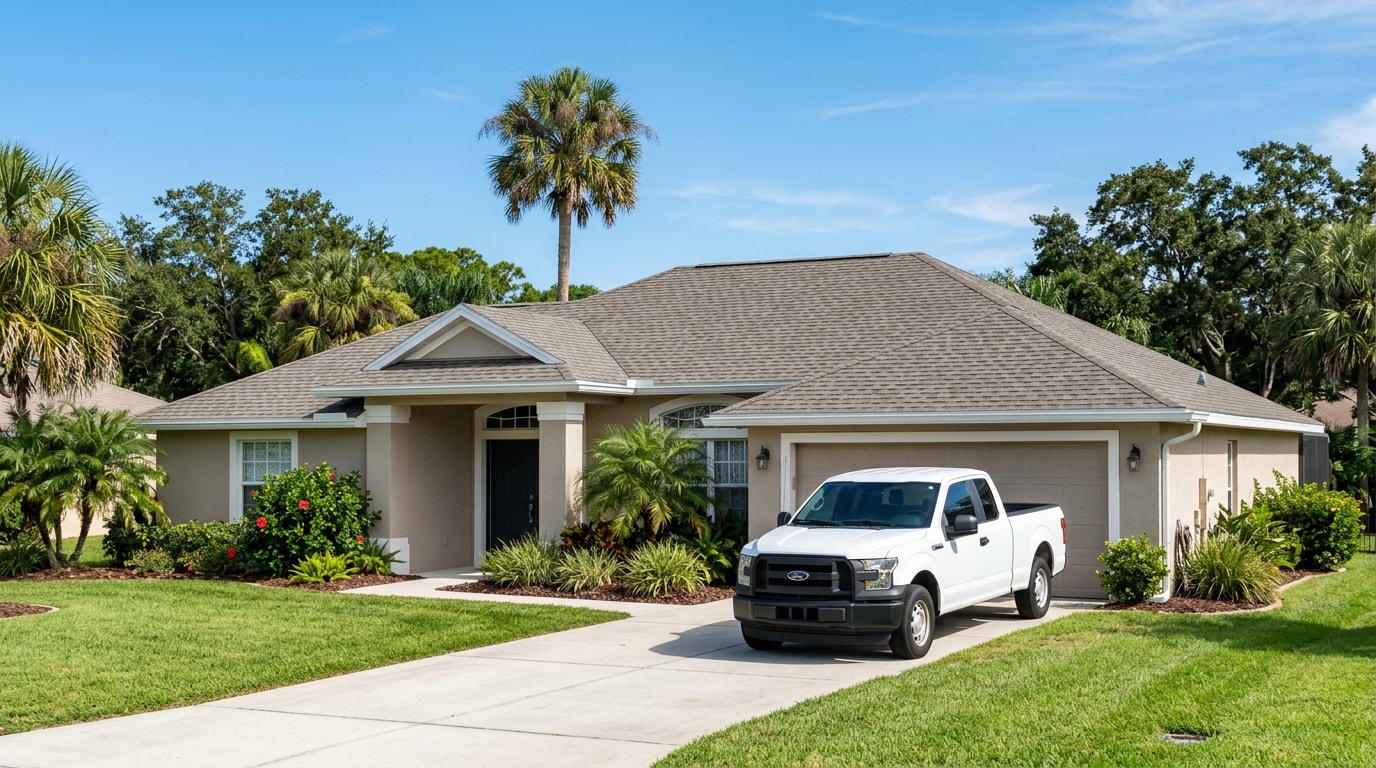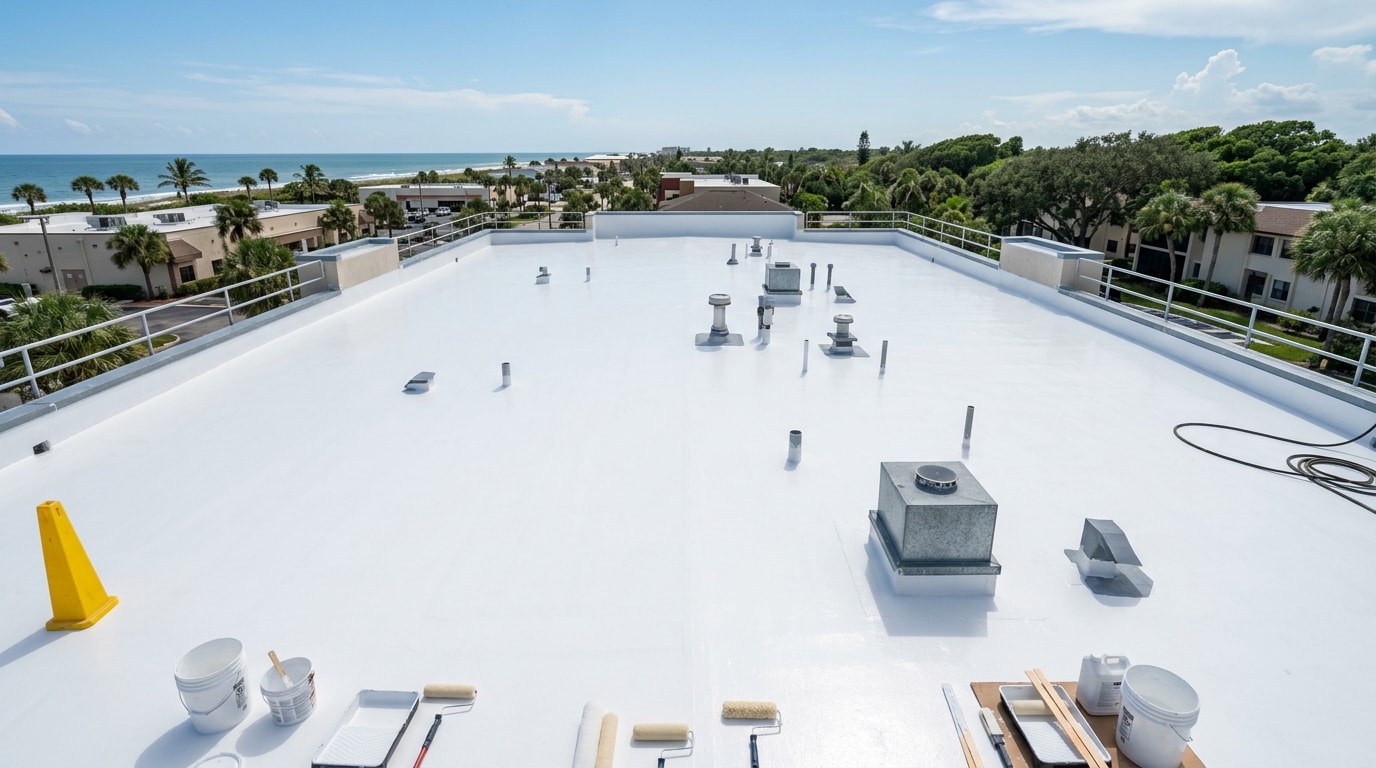
Modified bitumen roofing is one of the most common flat and low-slope systems we inspect on Sarasota properties, from lanai additions to small commercial buildings. It handles heat, foot traffic, and ponding better than plain asphalt, but only when the seams and drainage are done right. Here's how the system works, where it tends to fail locally, and how it stacks up against the alternatives.
What Is Modified Bitumen Roofing?
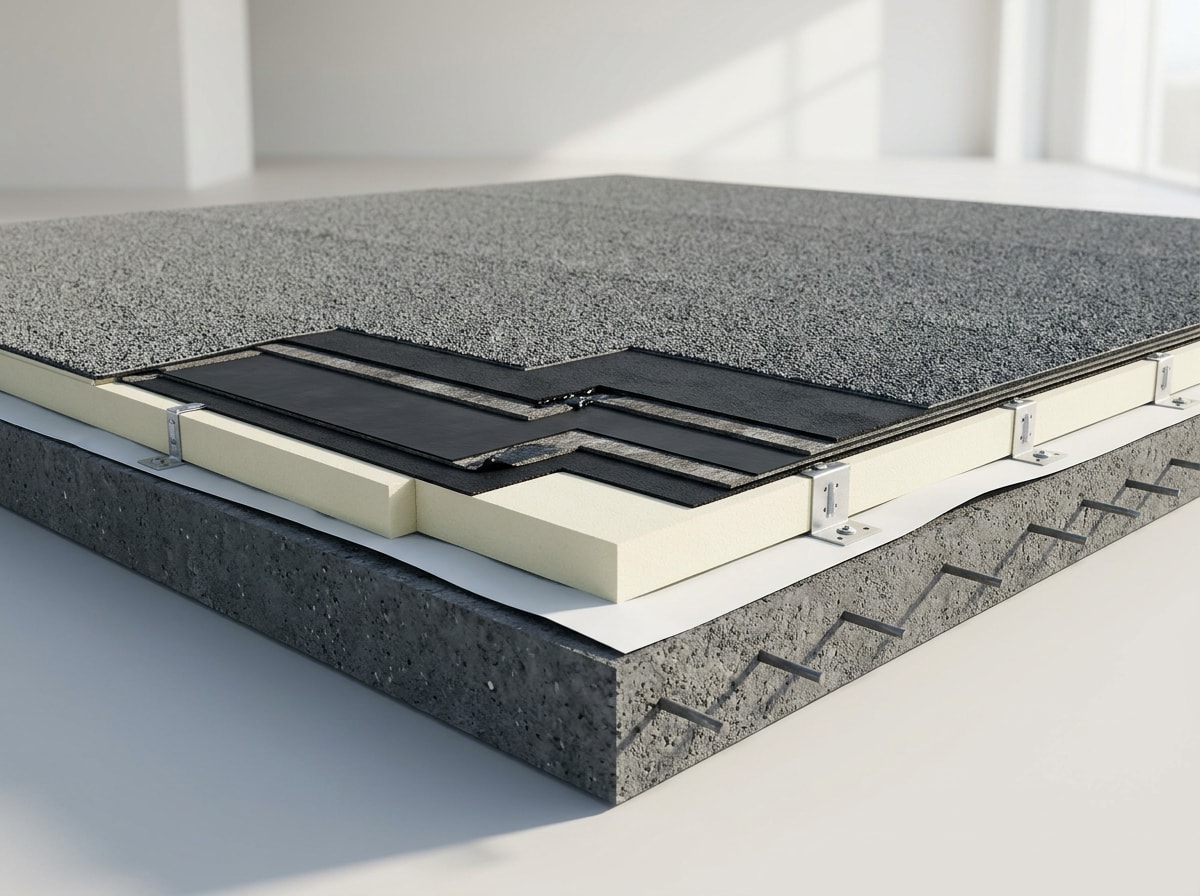
Modified bitumen roofing is a multi-ply, asphalt-based membrane reinforced with rubber or plastic polymers that add flexibility and tensile strength beyond what plain asphalt roofing can offer. The polymers are blended into the asphalt during manufacturing, creating a membrane that resists cracking as temperatures rise and fall.
This flat roof system shows up often on Sarasota homes with low-slope additions, as well as condos and small commercial buildings where a traditional shingle roof isn't practical. Because it's built in layers, it provides a level of redundancy that single-ply membranes can't always match.
Property owners evaluating roofing contractor services for a flat or low-slope section often start here, since modified bitumen remains one of the most established low-slope roofing choices in the region.
SBS vs. APP Modified Bitumen: Key Differences
Modified bitumen comes in two polymer formulations, and the difference matters for how the roof is installed and how it performs over time. Understanding both before you compare bids helps you ask better questions.
| Feature | SBS Modified Bitumen | APP Modified Bitumen |
|---|---|---|
| Polymer type | Rubber-based (styrene-butadiene-styrene) | Plastic-based (atactic polypropylene) |
| Installation method | Cold-applied or self-adhered | Torch-applied, heat-welded |
| Flexibility | High; flexes through temperature swings and wind uplift | Stiffer and more heat-resistant once cured |
| Where it's preferred | Occupied buildings where open flame is a concern | Roofs that need a rigid, continuous heat-fused bond |
SBS (styrene-butadiene-styrene) modified bitumen is the rubberized version of the membrane, prized for its elasticity. That flexibility lets the roof expand and contract through Sarasota's wide temperature swings and flex slightly during storm-driven wind uplift without tearing.
APP (atactic polypropylene) modified bitumen, by contrast, is a plastic-like polymer that's stiffer and more heat-resistant once cured. SBS membranes are typically installed cold-applied or self-adhered, which is often preferred on occupied properties because it avoids open flame near tenants or neighboring structures. APP membranes are usually torch-applied, fusing the layers with heat for a strong, continuous bond.
Benefits of Modified Bitumen Roofing
Modified bitumen earns its reputation through sheer durability. The multi-ply construction gives it strong puncture resistance, which matters on roofs that see regular foot traffic from HVAC servicing or maintenance work.
The layered design also builds in redundancy for waterproofing. If one layer is compromised, the layers beneath still provide a barrier against moisture.
On the properties we service along the Gulf Coast, this redundancy is usually the deciding factor for owners choosing between modified bitumen and a single-ply membrane. Combined with its flexibility in Florida heat, modified bitumen holds up well on roofs that need to withstand daily wear as well as seasonal extremes.
Owners weighing a full roof replacement against a modified bitumen system often find the trade-off between material cost and longevity works in their favor when the roof is installed correctly.
Drawbacks and Common Problems in Florida
Every roofing system has limitations, and modified bitumen's biggest one comes down to execution. How well it performs over the long run depends heavily on seam integrity and installation quality.
UV Exposure and Heat Shorten Lifespan
Sarasota's combination of intense sun, high heat, and an active storm season can shorten a modified bitumen roof's expected lifespan compared to installations in milder climates. Federal research on roofing material weathering confirms this is a materials-science issue, not just a local perception: an overview of the weathering of roofing materials shows that degradation initiated by ultraviolet radiation is a documented factor for plastics, wood, and asphalt used in roofing . Repeated heat cycling adds further stress to seams that weren't properly sealed from the start.
Poor installation quality compounds the problem, since weak seams give moisture intrusion a direct path into the roof deck. You can read more on how UV and heat affect weathering in the Department of Energy's overview of roofing material degradation.
Blistering, Flashing Wear, and Ponding Water
Beyond general wear, a handful of recurring issues show up on Sarasota modified bitumen roofs: blistering from trapped moisture, ponding water, and membrane damage around flashing and penetrations. Catching these early matters.
How to fix ponding water on a modified bitumen roof:
- Add tapered insulation to redirect water toward drains
- Build crickets behind rooftop curbs so water doesn't collect on the uphill side of equipment
- Enlarge undersized scuppers or drains where water has nowhere to go
- Install edge metal correctly to stop water from backing up at the roof perimeter
Industry guidance gives a clear benchmark for when standing water becomes a real problem. Ponding water for short durations is unavoidable and considered acceptable by NRCA and membrane roof system manufacturers, but ponding water in excess of 48 hours can be detrimental to the roof assembly. If your roof is still holding water two days after a storm, it's past the point of "normal" and worth a professional look. A roof inspection can confirm whether the issue is isolated or a sign of a larger slope problem.
Modified Bitumen vs. TPO: Which Is Right for Your Flat Roof?
Modified bitumen and TPO solve the same low-slope roofing problem in different ways. Modified bitumen's textured, multi-ply surface handles foot traffic and complex rooflines with lots of penetrations well, since it's easier to detail around pipes, curbs, and equipment stands.
TPO, a single-ply membrane, offers a smoother, more reflective surface and relies on heat-welded seams rather than layered asphalt. In Sarasota's climate, both systems can end up toward the shorter end of their lifespan ranges without regular maintenance, since constant UV exposure and salt air off the Gulf wear down any roofing material faster than in drier, cooler regions.
How Do I Know If My Existing Flat Roof Is TPO or Modified Bitumen?
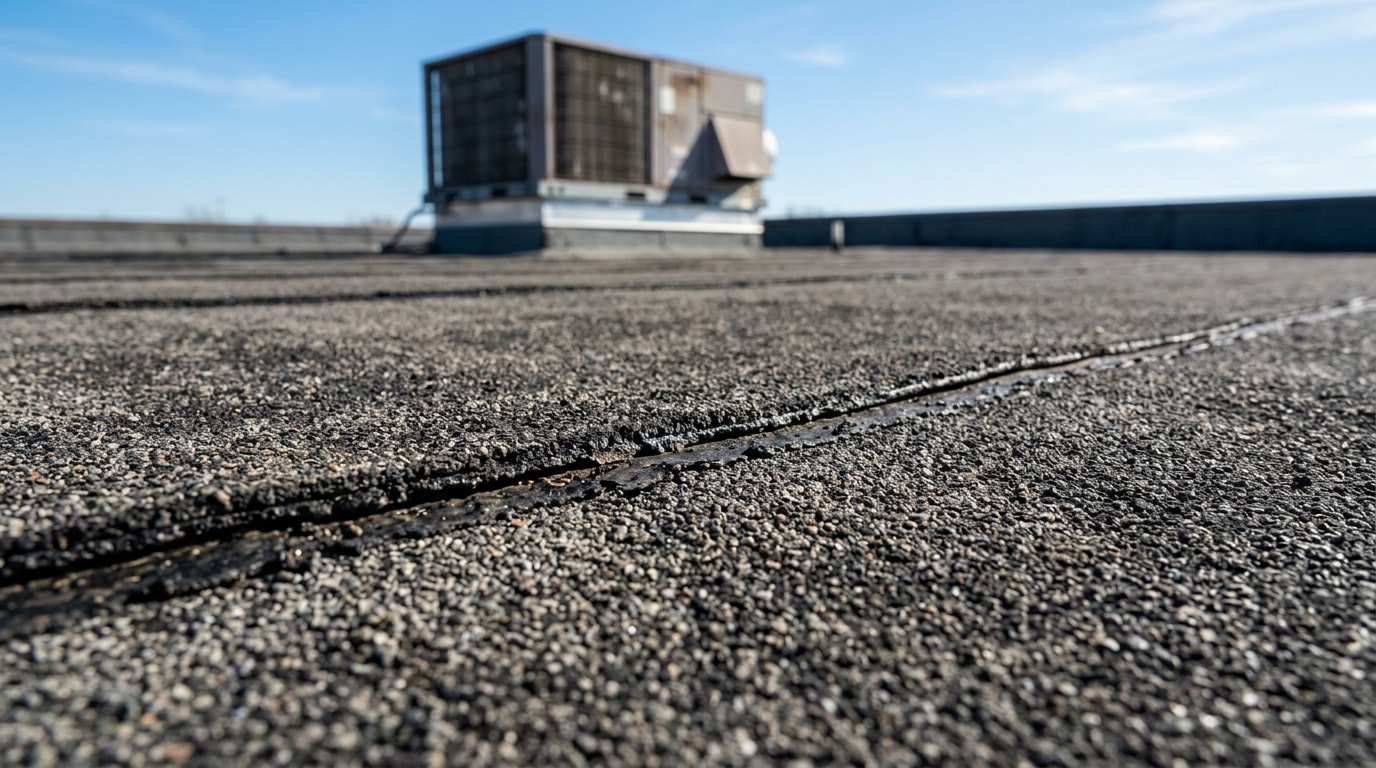
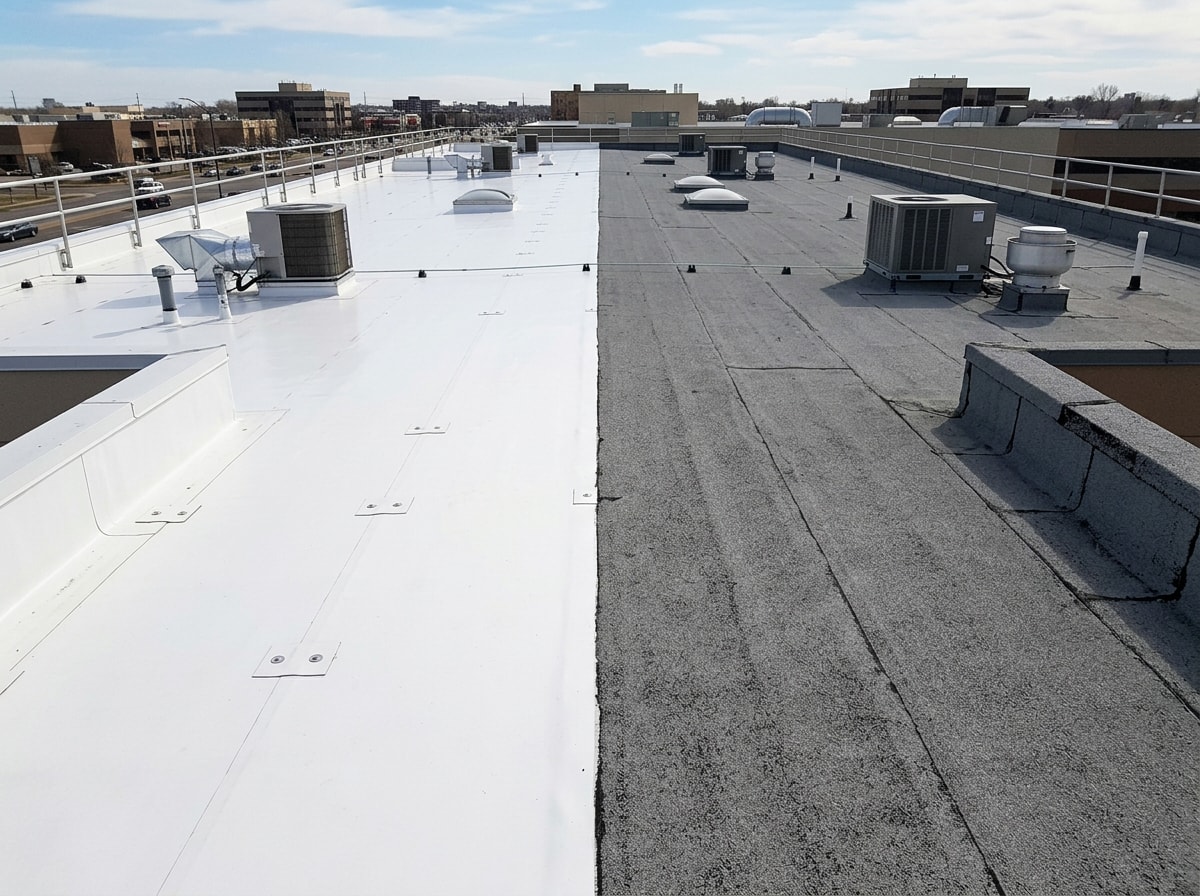
A quick visual check usually answers this. Modified bitumen has a textured, granulated surface with visible overlapping ply lines where the sheets were layered during installation.
TPO, by comparison, looks like a smooth, uniform sheet with no granules and clean, welded seam lines rather than overlapped edges. If you're still unsure after a visual check, a professional roof inspection can confirm the system and its current condition.
Flat Roof Services for Modified Bitumen Roofs
Modified bitumen roofs typically need a range of services depending on age and condition. Leak investigation and targeted repair address isolated problem areas, while partial replacement handles sections that have failed without requiring a full tear-off.
For roofs nearing the end of their service life, full tear-off and replacement resets the clock with new materials. Roofs still in sound condition may also be good candidates for a roof coating instead, which can extend service life at a lower cost than full replacement.
A flat roof repair assessment is usually the right first step to figure out which path fits your roof, whether it's a residential lanai section or a commercial building. If you're weighing options for a larger low-slope building, our commercial roof replacement page breaks down what that process looks like.
For owners comparing modified bitumen against other liquid-applied and single-ply options for a Sarasota-area flat roof, our guide to liquid applied roofing in Siesta Key covers another system worth knowing before you commit to a material.
Ready to find out which system fits your roof? Get a free estimate and we'll walk the roof with you before recommending anything.
FAQ
What Is Modified Bitumen Roofing Material?
Modified bitumen is an asphalt roofing material reinforced with polymers that add flexibility and strength. It's applied in multiple layers to create a durable, waterproof membrane suited to flat and low-slope roofs.
Is Modified Bitumen a Good Choice for Florida's Climate?
Yes, when professionally installed. Its waterproof layers and flexible composition allow it to handle Sarasota's intense sun and storm activity effectively, though installation quality directly affects how well it holds up long-term.
Should I Choose Modified Bitumen or TPO?
It depends on the building. Modified bitumen is durable and handles foot traffic well, while TPO offers a reflective surface with welded seams. A roofing professional can assess your roof's layout and usage to recommend the better fit.
How Is Modified Bitumen Different From Built-Up Roofing (BUR)?
Both are multi-ply asphalt systems, but BUR uses alternating layers of hot asphalt and reinforcing felts applied on-site, while modified bitumen uses factory-manufactured sheets with polymers already built in. Modified bitumen generally installs faster and offers more consistent flexibility than traditional BUR.
How Long Do Flat Roofs Last in Florida?
Lifespan depends heavily on drainage and maintenance rather than material alone. A flat roof that drains well and gets inspected regularly will typically last considerably longer than one left unchecked.
Will Insurance Cover a 20-Year-Old Roof in Florida?
Often not without conditions. An insurer may not refuse to issue or renew a homeowner's policy on a roof under 15 years old solely because of its age, but for a roof that is at least 15 years old, an insurer must allow a homeowner to have a roof inspection performed by an authorized inspector before requiring replacement, and may not refuse coverage solely because of roof age if that inspection indicates the roof has 5 years or more of useful life remaining. You can review the full requirement in Florida Statute 627.7011. Checking your roof's age and condition early can help avoid coverage surprises.
How Do I Get a Ponding or Drainage Problem Diagnosed?
Watch the roof after the next heavy rain. If water is still standing after two days under normal drying conditions, schedule a roof inspection to check slope, drains, and membrane condition before it turns into a leak.
Modified bitumen remains a solid option for Sarasota's flat and low-slope roofs when it's installed and maintained correctly. If you're not sure whether your current roof needs repair, a coating, or a full replacement, visit our homepage to see the full range of flat roof services we offer across Sarasota, Manatee, and surrounding counties, or contact us to schedule a walk-through.