Flat roof repairs in Venice, FL usually start the same way: a ceiling stain spreads, or water sits on the membrane longer than it should after a storm. Venice's intense UV exposure and heavy summer rain put real stress on TPO, EPDM, PVC, modified bitumen, and built-up roofing systems. Here's what those repairs typically cost, the warning signs to watch for, and when repair stops making sense.
How Much Do Flat Roof Repairs Cost in Venice, FL?
Most flat roof repairs fall into a few predictable cost bands based on the size and severity of the damage. A small seam reseal costs far less than a repair involving soaked insulation or deck damage.
| Repair Type | Typical Cost Range |
|---|---|
| Minor patch or seam reseal | $300 – $800 |
| Flashing, drain, or edge repair | $500 – $1,500 |
| Large puncture or membrane section replacement | $1,500 – $4,000 |
| Storm damage with saturated insulation or decking | $4,000+ |
Material also affects price per square foot once a repair requires new membrane material rather than a simple patch:
| Membrane Type | Typical Repair Cost per Sq. Ft. |
|---|---|
| Modified bitumen | $4 – $8 |
| TPO | $4 – $10 |
| EPDM | $5 – $10 |
| PVC | $6 – $12 |
These ranges shift based on roof access, the age of the existing system, and whether hidden water damage turns up once a technician opens the roof. An on-site roof inspection is the only way to get a number specific to your roof.
Signs Your Flat Roof Needs Repair
Flat roofs fail quietly at first. By the time a leak shows up on a ceiling, the membrane has usually been compromised for a while. Watch for:
- Water that still sits on the roof more than 48 hours after rain stops
- Bubbling, blistering, or soft spots in the membrane
- Seams that have pulled apart at walls, curbs, or drains
- Cracking or an alligator-skin texture on older bitumen or BUR sections
- Interior ceiling stains or a musty smell in the room below
- Granule loss or exposed fabric on built-up roofing
Catching these early keeps a repair a repair, instead of letting it grow into a full roof replacement.
Repair vs. Replace: When Each Makes Sense
Not every damaged flat roof needs to come off. The right call usually comes down to three questions: how old is the roof, how much of it is affected, and how often has it already needed work.
As a rule of thumb, a flat roof under 10 to 12 years old with isolated damage is usually a good repair candidate. A roof past 20 years with recurring leaks in multiple spots is typically closer to replacement, even if no single area looks catastrophic.
Florida also has a building-code detail that matters here. Under Florida Statute 553.844, if more than 25% of a roof section is repaired, replaced, or recovered within a 12-month period, that section generally has to be brought up to the current Florida Building Code, unless the existing roof already complies with the 2007 code or a later edition. In practice, this means a series of "small" patch jobs on the same section can trigger code-upgrade requirements faster than homeowners expect. You can read the full statute language on the Florida Legislature's site.
When our crews evaluate a Venice flat roof with a patchwork repair history, this is often the deciding factor: not the visible damage, but how much of the roof has already been touched in the last year.
Flat Roof Materials in Venice, FL: Repair Considerations by System
Each membrane type fails differently, which changes how a repair gets diagnosed and executed.
TPO Roofing
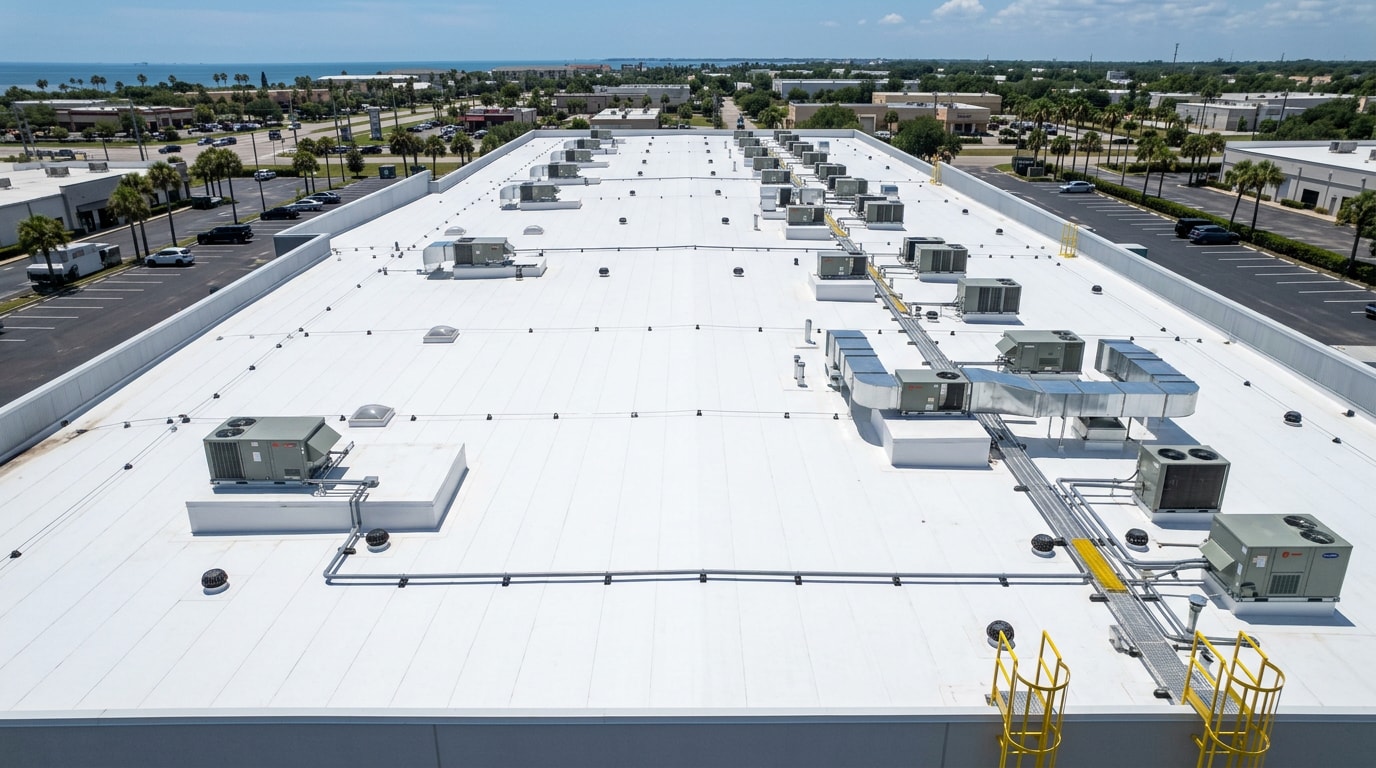
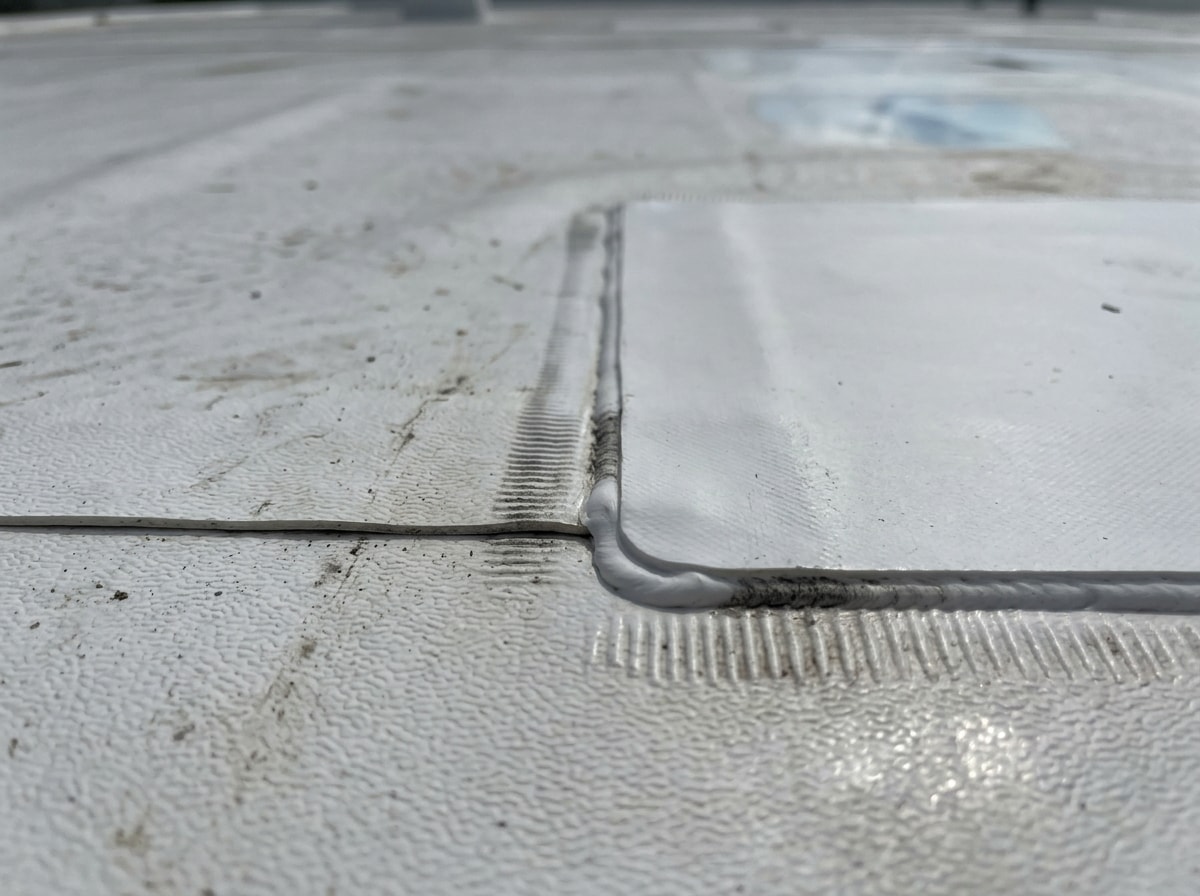
TPO is a single-ply membrane known for heat-welded seams and a reflective white surface. Repairs typically address seam separation, punctures, and seams that weren't welded correctly during the original install. Its UV resistance makes it well-suited to Venice's summer sun, though performance still varies by manufacturer and installer quality.
EPDM Roofing
EPDM is a synthetic rubber membrane valued for flexibility and lower material cost. Common repair needs include edge shrinkage, flashing pulling away from walls, and cracking near areas where water sits too long. Well-maintained EPDM can last 20 to 25 years, though Florida heat shortens that timeline without routine maintenance.
PVC Roofing
PVC shares traits with TPO but offers stronger chemical and UV resistance, which makes it a durable choice for roofs exposed to grease or heavy ponding. PVC repairs involve heat-welding patches directly to the membrane, since PVC bonds poorly with TPO or EPDM repair materials.
Modified Bitumen Roofing
Modified bitumen blends asphalt with rubber or plastic polymers for added flexibility. It commonly covers porches, additions, and other low-slope sections of a property. Repairs usually address blistering, granule loss, and seam re-adhesion where layers age unevenly under constant sun.
Built-Up Roofing (BUR)
BUR is a multi-ply system made of alternating asphalt layers and reinforcing fabric, often capped with gravel. Repairs usually follow ponding water, cracking, or layer separation. BUR costs more to repair per square foot than single-ply systems but can last 20 to 30 years when properly maintained. The National Roofing Contractors Association's technical guidance on ponding water notes that water remaining on a low-slope roof for more than 48 hours after a rain event is considered a drainage problem, not a normal condition, on any membrane type.
If you're weighing flat roof systems against other low-slope repair paths, our flat roof repair options guide for Siesta Key walks through how these same materials perform on barrier-island properties nearby.
Roof Coatings as a Repair Alternative
Reflective and elastomeric coatings extend an aging membrane's life without a full tear-off. They seal minor cracks and reflect sunlight instead of absorbing it, which helps lower cooling costs through Venice's long humid season. ENERGY STAR's program requirements for reflective roof products confirm measurable solar reflectance benefits for qualifying coatings, which is why a roof coating often makes sense as a mid-life maintenance step rather than jumping straight to replacement. You can review the technical criteria in ENERGY STAR's roof products specification.
Coatings aren't a fix for structural damage or saturated insulation. They work best on a membrane that's still sound but starting to show UV wear.
Storm Damage and Flat Roof Restoration
Florida's hurricane season brings wind-driven rain and sudden pressure changes that stress every flat roof system at once. A routine repair call after a storm can reveal saturated insulation or membrane failure that isn't visible from the surface. In our experience inspecting storm-damaged flat roofs in Venice, saturated insulation hiding under an intact-looking membrane is one of the more common surprises, and it usually doesn't show up until the roof is opened up for a closer look.
If your property is in Venice or elsewhere along the Gulf Coast, a post-storm inspection is worth scheduling even when the damage looks minor from the ground.
Scheduling a Flat Roof Inspection in Venice, FL
A thorough flat roof inspection covers seams, flashing, drainage paths, and ponding areas, since these spots fail first. Most flat roofs benefit from inspection twice a year, plus a check after any major storm.
Scheduling flat roof repair starts with a full look at the system, not just the visible leak. Get a free estimate and we'll walk the roof, document what we find with photos, and give you straight options for repair versus replacement before any work begins. You can also visit our homepage to see the full range of residential and commercial roofing services we handle across Venice and the surrounding Gulf Coast.
FAQ
How much does flat roof repair cost in Venice, FL?
Most minor repairs, like a patch or seam reseal, run $300 to $800. Larger repairs involving flashing, drains, or membrane sections typically cost $1,500 to $4,000, and storm damage with saturated insulation or decking can run higher. An on-site inspection gives the most accurate number for your roof.
What are the signs a flat roof needs repair?
Ponding water that lasts more than 48 hours after rain, bubbling or soft spots in the membrane, separated seams, and interior ceiling stains are the clearest warning signs. Cracking or granule loss on older bitumen and BUR roofs also signals it's time for a repair.
Can a flat roof be repaired instead of replaced?
Often, yes, especially if the roof is under 10 to 12 years old and the damage is limited to one section. Roofs with recurring leaks in multiple areas, or those approaching 20 years old, are usually better candidates for replacement.
What is the best flat roof material for Florida?
TPO and PVC generally handle Florida's heat and UV exposure best. EPDM and modified bitumen remain solid, lower-cost options depending on roof age and budget.
How long does a flat roof last in Florida?
Most single-ply membranes like TPO, EPDM, and PVC last 15 to 25 years with routine maintenance. Built-up roofing can last 20 to 30 years but costs more to repair per square foot along the way.
Does insurance cover flat roof repair after a storm?
It depends on the policy and the cause of damage. Wind and storm-related damage is often covered, while damage from age, wear, or lack of maintenance usually isn't. Documentation from a professional inspection helps support a claim either way.